
How the Analog AI Chip Redefines Edge Computing Efficiency
Estimated reading time: 7 minutes
- The analog AI chip addresses the global energy crisis by performing computations directly in memory, bypassing the traditional Von Neumann bottleneck.
- By utilizing physical properties like electrical resistance and phase-change memory, analog hardware can achieve up to 100x better energy efficiency than digital GPUs.
- While challenges like signal noise exist, analog computing is becoming essential for deploying secure, local private AI infrastructure and high-performance edge devices.
- The Inherent Limits of Digital Computing
- Understanding the Analog AI Chip Architecture
- Why Neural Network Acceleration Needs a New Path
- Comparing Analog vs Digital AI Chips
- Edge AI Power Efficiency in the Real World
- The Role of IBM Analog Computing in Research
- Building Private Infrastructure with Analog Hardware
- Overcoming the Noise: Technical Hurdles
- The Road to 2027: Commercial Viability
- Conclusion
- FAQ
- Sources
The global demand for artificial intelligence has triggered an unprecedented energy crisis. As large language models grow in complexity, the hardware supporting them consumes massive amounts of electricity. Consequently, researchers are searching for radical alternatives to traditional silicon architecture. The introduction of the analog AI chip represents perhaps the most significant shift in computing history. This technology promises to deliver high-performance intelligence at a fraction of the power cost.
At Synthetic Labs, we track the convergence of hardware and software closely. We believe that the transition to analog computing will unlock the next era of private infrastructure. By moving away from digital constraints, companies can finally deploy powerful models on the edge without draining local power grids. This article explores how IBM and other leaders are using analog architectures to solve the most pressing bottlenecks in modern AI.
The Inherent Limits of Digital Computing
Modern computers rely on the Von Neumann architecture, which separates the processor from the memory. Therefore, data must constantly travel back and forth between these two components. This constant movement creates a massive bottleneck, especially for neural networks that require billions of calculations. As a result, even the most advanced GPUs waste significant energy simply moving data rather than processing it.
Digital systems also represent information using binary code—ones and zeros. While this method is precise, it is not particularly efficient for the probabilistic nature of AI. Neural networks function through weights and activations, which are essentially continuous mathematical values. Converting these values into digital bits requires immense computational overhead. Consequently, the industry is reaching a point of diminishing returns with traditional silicon.
Furthermore, the heat generated by digital processors limits their deployment in small, enclosed environments. For example, a drone or a remote industrial sensor cannot carry a massive cooling system. To overcome these barriers, we must reconsider how the hardware handles the fundamental math of machine learning. This is where the analog AI chip provides a transformative solution.
Understanding the Analog AI Chip Architecture
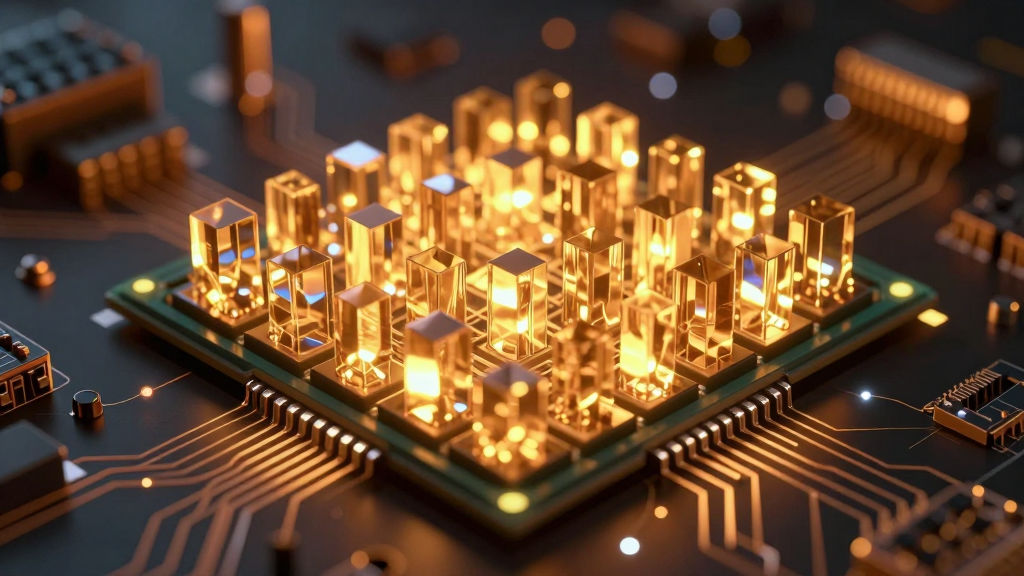
An analog AI chip functions very differently than the CPU or GPU inside your current laptop. Instead of using discrete digital signals, these chips use physical properties like electrical resistance to store data. Specifically, researchers use “crossbar arrays” of memory cells to perform calculations directly where the data lives. This approach is often called “compute-in-memory,” and it eliminates the data movement bottleneck entirely.
In an analog system, the weights of a neural network are stored as the conductance of individual memory cells. When an electrical signal passes through these cells, the physics of the circuit automatically performs the multiplication and addition. Consequently, the chip completes complex matrix math in a single step. This process happens at the speed of light and uses significantly less power than a digital circuit.
IBM Research has been a pioneer in this space, recently unveiling a prototype that demonstrates remarkable efficiency. Their design uses phase-change memory to mimic the way human neurons and synapses function. By using these biological principles, the analog AI chip can achieve a level of density and efficiency that was previously unthinkable. Moreover, this architecture allows for massive parallelization, which is essential for running modern generative models.
Why Neural Network Acceleration Needs a New Path
The current trend in AI development focuses on “bigger is better.” However, this philosophy often ignores the environmental and financial costs of training and inference. To sustain this growth, we need better neural network acceleration that does not rely solely on brute-force digital power. Analog computing offers a way to maintain performance while slashing energy requirements by up to 100 times.
For instance, consider the energy needed to process a single image in a self-driving car. In a digital system, the processor must fetch weights from memory, perform thousands of operations, and store the result. In contrast, an analog chip performs these operations passively through the physical layout of the hardware. This efficiency is why many experts believe analog will dominate the future of GPT-5 Thinking Mode & Enterprise AI and hardware design.
Transitioning to analog also simplifies the hardware stack. Because the calculations are done in-place, there is less need for complex cache hierarchies or high-bandwidth memory interfaces. As a result, the physical footprint of the AI accelerator shrinks. This allows for more compact designs in robotics, medical devices, and mobile technology.
Comparing Analog vs Digital AI Chips
To understand the impact of this technology, we must compare analog vs digital AI chips across several key metrics. While digital chips offer high precision and flexibility, analog chips excel in power efficiency and throughput.
- Energy Consumption: Analog chips use significantly less power because they eliminate data shuffling.
- Precision: Digital chips are perfect for accounting or logic, but analog is “good enough” for the statistical nature of AI.
- Heat Dissipation: Because they operate at lower voltages, analog systems stay much cooler than digital GPUs.
- Cost: Once mass-produced, analog chips could be cheaper due to their simplified architecture.
However, analog computing does face challenges. Specifically, electrical noise and temperature fluctuations can affect the accuracy of the calculations. Engineers are currently developing “noise-resilient” training algorithms to compensate for these physical variations. Despite these hurdles, the performance-per-watt advantage of the analog AI chip is too large for the industry to ignore.
Edge AI Power Efficiency in the Real World
The most immediate application for this technology is in the field of edge computing. Currently, most AI processing happens in the cloud because edge devices lack the necessary power. However, sending data to the cloud introduces latency and privacy risks. Improving edge AI power efficiency through analog hardware allows companies to keep their data local and secure.
In industrial settings, four-legged robots and autonomous sensors can use analog chips to process visual data in real-time. According to recent reports from AI Magazine, the integration of specialized AI hardware is becoming a top priority for global manufacturing leaders. These robots can navigate complex environments for hours longer than their digital counterparts.
Furthermore, wearable medical devices could benefit from this efficiency. A heart monitor equipped with an analog AI chip could detect anomalies locally without needing a constant connection to a smartphone. This would extend battery life from days to months. By bringing intelligence directly to the sensor, we create a more responsive and reliable technological ecosystem.
The Role of IBM Analog Computing in Research
IBM has remained at the forefront of this revolution for over a decade. Their work on IBM analog computing focuses on “Phase-Change Memory” (PCM), which allows for non-volatile storage of synaptic weights. This means the chip remembers its training even when the power is turned off. Consequently, the system is ready to perform inference the moment it receives an input signal.
In recent lab tests, IBM’s analog prototypes outperformed standard digital processors in energy efficiency by multiple orders of magnitude. They achieved this by optimizing the “multiply-accumulate” (MAC) operations that form the backbone of deep learning. Furthermore, IBM is building software tools that allow developers to convert their existing PyTorch or TensorFlow models for analog execution.
This bridge between software and hardware is crucial. Most developers do not want to rewrite their code for a new type of chip. Therefore, IBM’s focus on a seamless “digital-to-analog” compiler will accelerate the adoption of this technology in the enterprise sector. As these tools mature, we expect to see analog accelerators appearing in standard server racks alongside traditional CPUs.
Building Private Infrastructure with Analog Hardware
For many of our clients at Synthetic Labs, data privacy is a non-negotiable requirement. Deploying Private AI Infrastructure is the only way to ensure that sensitive company data never leaves the local network. However, running a private data center is expensive and energy-intensive.
The analog AI chip changes the economics of private AI. Instead of purchasing dozens of power-hungry GPUs, a company could use a single analog rack to handle its entire inference workload. Because these chips generate less heat, the requirements for specialized cooling and industrial power are greatly reduced. This makes on-premise AI accessible to small and medium-sized businesses for the first time.
Moreover, the longevity of analog hardware is a significant benefit. Since these chips operate at lower thermal stress, they are less likely to suffer from hardware failure over time. This reliability is essential for mission-critical applications in finance, defense, and healthcare. We anticipate that the next generation of private LLM appliances will feature analog co-processors to handle heavy reasoning tasks.
Overcoming the Noise: Technical Hurdles
While the potential is vast, we must acknowledge the difficulties in manufacturing the analog AI chip. Unlike digital bits, which are either “on” or “off,” analog values are continuous. This means that tiny variations in the manufacturing process can lead to “device-to-device” variability. Consequently, a model that works perfectly on one chip might behave slightly differently on another.
To solve this, researchers are implementing “on-chip learning” techniques. This allows the chip to calibrate itself and compensate for its own unique physical quirks. Additionally, new materials like resistive RAM (ReRAM) are being tested to provide more stable and predictable conductance levels.
Software also plays a role in mitigating these issues. By training models with “quantization-aware” techniques, developers can make their neural networks more robust. This ensures that even if the analog hardware has a small amount of signal noise, the overall output remains accurate. As these techniques improve, the gap between digital precision and analog efficiency will continue to close.
The Road to 2027: Commercial Viability
As we look toward the next few years, the roadmap for the analog AI chip is becoming clearer. We are currently moving from the “academic prototype” phase into the “early adopter” phase. Several startups are already shipping analog-inspired hardware for specific tasks like voice recognition and gesture sensing.
However, the real breakthrough will occur when analog chips can support large-scale generative AI. We expect to see hybrid systems that combine digital logic for control and analog arrays for heavy math. This “best of both worlds” approach will likely become the standard for high-end AI workstations and servers.
By 2027, the energy savings provided by analog computing will be a competitive necessity. Companies that continue to rely solely on digital infrastructure will face skyrocketing operational costs. Meanwhile, those who integrate analog accelerators will enjoy faster inference speeds and much lower overhead. At Synthetic Labs, we are already helping our partners prepare for this transition by auditing their current hardware workflows.
Conclusion
The emergence of the analog AI chip marks a fundamental turning point in the history of computing. By leveraging the laws of physics to perform calculations, we can finally break the power-hungry cycle of digital silicon. This technology provides the necessary edge AI power efficiency to bring intelligence to every corner of the physical world.
Whether it is through IBM analog computing research or new materials like ReRAM, the goal remains the same: sustainable, efficient, and private intelligence. As we move forward, the distinction between “computing” and “physics” will continue to blur. The result will be a new generation of devices that are smarter, cooler, and more capable than anything we have seen before.
The future of AI is not just about smarter software; it is about better hardware. Embracing the analog AI chip is the most effective way to ensure that our technological progress does not outpace our energy resources.
Subscribe for weekly AI insights to stay ahead of the hardware revolution.
FAQ
- What is an analog AI chip?
- An analog AI chip is a type of processor that uses physical electrical properties, such as resistance or voltage, to perform mathematical calculations directly in memory. This differs from digital chips that use binary code and separate processors.
- Why is analog computing better for AI?
- Neural networks are based on continuous mathematical weights, which map perfectly to analog signals. Analog chips eliminate the need to move data between memory and the processor, which saves massive amounts of energy and reduces heat.
- Is analog AI less accurate than digital AI?
- Analog systems can be subject to electrical noise, which may slightly reduce precision. However, for most AI tasks like image recognition or language processing, this tiny loss in precision is negligible and can be corrected through specialized training.
- When will analog AI chips be available?
- Small-scale analog chips are already used in some specialized sensors today. Larger, more powerful analog accelerators for enterprise use are currently in the prototype stage and are expected to hit the broader market within the next two to three years.