
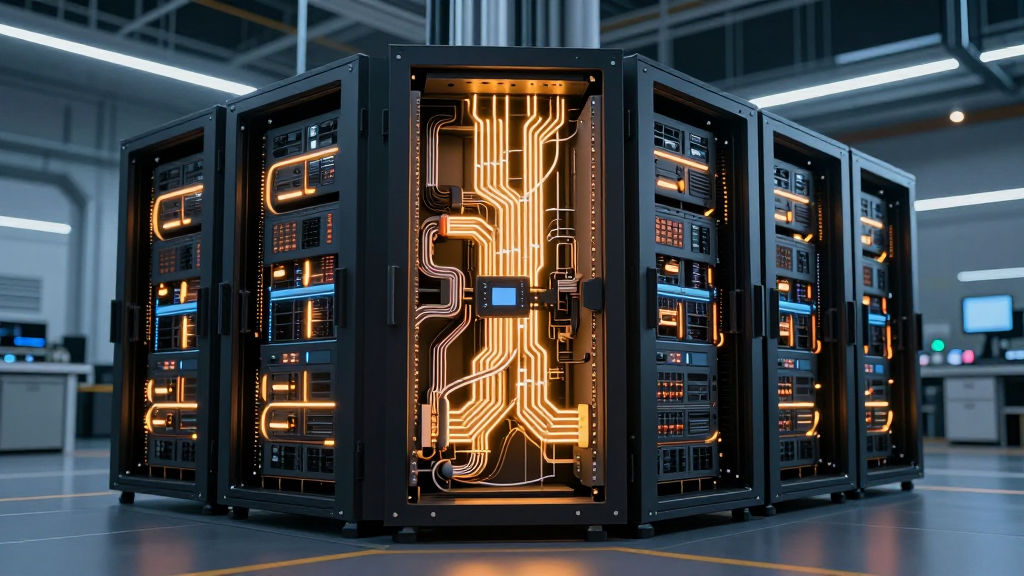
NVIDIA Rubin Platform: The Architecture for Agentic AI
Estimated reading time: 7 minutes
- Rubin represents the shift from generative AI to autonomous, reasoning agentic AI via an “extreme-codesigned” six-chip architecture.
- Introduction of NVFP4 compute provides 50 petaflops of performance, dramatically reducing costs and GPU requirements for MoE models.
- Revolutionary Inference Context Memory Storage uses BlueField-4 DPUs to create persistent, gigascale “working memory” for AI agents.
- The Vera Rubin NVL72 and NVLink 6 interconnects allow for million-GPU clusters to function as a single, unified compute fabric.
- From Generative to Agentic: The Rubin Evolution
- The Power of NVFP4 Compute in MoE Models
- Inference Context Memory Storage and BlueField-4
- Vera Rubin NVL72: The New Standard for Superfactories
- NVLink 6 and the Million-GPU Backbone
- Red Hat Rubin AI Stack and Sovereign AI
- CoreWeave Mission Control: Orchestrating the Future
- Building for the Future with Spectrum-X Ethernet Photonics
- Conclusion
- FAQ
- Sources
The landscape of artificial intelligence is shifting from simple text generation to complex, autonomous reasoning. To meet this demand, the NVIDIA Rubin platform emerged at CES 2026 as the definitive foundation for the next decade of computing. This platform represents more than a simple hardware refresh. It is the first “extreme-codesigned” six-chip supercomputer designed specifically to power agentic AI and massive Mixture-of-Experts (MoE) models.
While previous architectures focused on raw throughput, the NVIDIA Rubin platform prioritizes the efficiency of reasoning and the persistence of memory. Consequently, organizations can now build AI factories that think, remember, and act with unprecedented speed. This article explores how Rubin’s innovations—from NVFP4 compute to revolutionary storage layers—will redefine the boundaries of private and hyperscale infrastructure.
From Generative to Agentic: The Rubin Evolution
For the past two years, the industry focused heavily on Blackwell to drive generative AI. However, the requirements for agentic AI are fundamentally different. Agents require long-term context, rapid multi-step reasoning, and constant interaction with external tools. The NVIDIA Rubin platform addresses these needs by integrating six distinct chips into a unified, high-performance fabric.
NVIDIA designed this architecture to handle the massive state-space requirements of modern autonomous systems. For example, while Blackwell excelled at static inference, Rubin introduces the Vera Rubin NVL72 rack to handle the dynamic shifting of weights in real-time. This capability allows models to “reason” through problems rather than just predicting the next token in a sequence.
Furthermore, the shift toward agentic AI necessitates a move away from transient computing. We are seeing a transition where AI models behave more like persistent software entities. To support this, the NVIDIA Rubin platform leverages a codesigned approach that synchronizes the CPU, GPU, DPU, and network switches into a single cohesive unit.
The Power of NVFP4 Compute in MoE Models
One of the most significant technical leaps within the Rubin architecture is the introduction of NVFP4 compute. This 4-bit floating-point format allows for 50 petaflops of compute on a single Rubin GPU. Consequently, it enables the training and deployment of much larger models using 4x fewer GPUs than previous generations.
Mixture-of-Experts (MoE) architectures benefit immensely from this efficiency. Because MoE models only activate specific “experts” for given tasks, they require high-speed switching and massive memory bandwidth. NVFP4 provides the precision necessary for these complex activations while significantly reducing the power envelope.
Moreover, the reduction in precision does not result in a loss of accuracy for reasoning tasks. NVIDIA’s adaptive compression engines ensure that critical weights remain protected. As a result, developers can deploy models that are both smarter and more cost-effective. This trend aligns with the industry’s move toward small reasoning AI models that prioritize logic over brute-force parameter counts.
Inference Context Memory Storage and BlueField-4
Agentic AI requires a new way to handle memory. Standard VRAM is often too small to hold the massive context windows needed for multi-day reasoning tasks. To solve this, NVIDIA introduced Inference Context Memory Storage. This new AI-native storage class utilizes the BlueField-4 DPU to create a gigascale memory pool.
This storage layer acts as a “working memory” for the AI. Instead of purging data after every prompt, the system retains context across millions of tokens. Therefore, an AI agent can remember a conversation from three weeks ago or analyze a 10,000-page technical manual without losing focus. This innovation is critical for enterprises building private AI infrastructure where data persistence is a requirement for workflow automation.
The BlueField-4 DPU serves as the gatekeeper for this memory. It manages data movement without taxing the main Vera CPU or Rubin GPUs. Specifically, it provides a 5x increase in power efficiency for data handling compared to traditional architectures. This allows the Rubin platform to maintain “always-on” agents that process real-world data in real-time.
Vera Rubin NVL72: The New Standard for Superfactories
At the rack level, the Vera Rubin NVL72 provides the physical blueprint for modern AI datacenters. This system integrates the Vera CPU and Rubin GPU using the latest NVLink 6 interconnects. By combining these chips, NVIDIA has created a platform that treats the entire rack as a single, massive GPU.
The Vera CPU is a specialized processor designed to feed data to the Rubin GPUs at lightning speeds. In contrast to general-purpose CPUs, Vera is optimized specifically for the data-orchestration patterns of AI workloads. This synergy eliminates the bottlenecks that often plague large-scale training clusters.
Furthermore, Microsoft has already committed to this architecture through its Fairwater AI superfactories. These facilities will scale to hundreds of thousands of Vera Rubin racks, creating a global network of exascale compute. According to Microsoft’s Strategic AI Datacenter Planning Enables Seamless Large-Scale NVIDIA Rubin Deployments, these deployments will enable seamless integration for enterprises looking to scale their AI operations globally.
NVLink 6 and the Million-GPU Backbone
Scaling AI to the next level requires more than just faster chips; it requires a faster network. The NVLink 6 switch is the backbone of the NVIDIA Rubin platform. It enables bidirectional, low-latency data sharing across all six chips in the ecosystem. This allows researchers to treat a cluster of a million GPUs as a unified compute fabric.
The low latency provided by NVLink 6 is essential for “all-reduce” operations during training. When thousands of GPUs need to synchronize their learning, any delay can stall the entire process. NVLink 6 reduces this friction, allowing for near-linear scaling of performance as more hardware is added.
Simultaneously, the ConnectX-9 SuperNIC ensures that the network remains reliable. The second-generation RAS (Reliability, Availability, and Serviceability) Engine provides proactive maintenance. It can identify potential chip failures before they happen and reroute data automatically. This modularity makes the Rubin platform 18x faster to service than previous systems, which is a vital metric for uptime-sensitive AI labs.
Red Hat Rubin AI Stack and Sovereign AI
For many organizations, the cloud is not enough. They require “Sovereign AI”—systems that reside within their own borders and under their own control. The Red Hat Rubin AI stack addresses this need by optimizing OpenShift and Enterprise Linux for the Rubin architecture.
This collaboration brings confidential computing to the forefront. The NVIDIA Rubin platform includes third-generation confidential computing features that protect data even while it is being processed. Consequently, regulated sectors like finance and healthcare can finally deploy large-scale AI without risking data exposure.
Software-defined infrastructure is the key to this deployment. Red Hat’s involvement ensures that the Rubin hardware is easy to manage using standard DevOps tools. This bridge between high-performance silicon and enterprise software allows for more rapid adoption of AI across traditional industries. It also mitigates some of the AI Energy Infrastructure Challenges by allowing for more granular control over power consumption and resource allocation.
CoreWeave Mission Control: Orchestrating the Future
Not every company can build their own “superfactory.” Specialized cloud providers like CoreWeave are filling this gap. Through CoreWeave Mission Control, developers can access the NVIDIA Rubin platform on a fractional basis. This platform allows for the side-by-side operation of Rubin and Blackwell chips, ensuring a smooth transition for existing workloads.
Mission Control simplifies the complexity of NVLink 6 integration. It provides a “single pane of glass” for managing massive GPU clusters. Therefore, even small-to-medium enterprises (SMEs) can leverage the same hardware used by tech giants like Meta.
Meta themselves are planning to deploy millions of Meta NVIDIA Rubin GPUs to power their next-generation reasoning models. This massive investment validates the Rubin architecture as the industry standard. By utilizing the NVFP4 compute format, Meta aims to reduce the economic cost of running social-scale AI agents, making the technology more accessible to the global open-source community.
Building for the Future with Spectrum-X Ethernet Photonics
While NVLink handles communication within the rack, Spectrum-X Ethernet Photonics handles the “east-west” traffic between racks. This technology uses light to transmit data, providing 5x better power efficiency than traditional copper-based Ethernet.
This is particularly important as AI factories grow to million-GPU scales. The heat generated by traditional networking can become a physical limit on datacenter size. Photonics solves this by moving data with minimal thermal output. Consequently, the NVIDIA Rubin platform can support much higher densities of compute in a smaller footprint.
The Spectrum-6 Switch works in tandem with these photonics to ensure that data packets reach their destination with zero loss. This reliability is the difference between a training run that takes weeks and one that finishes in days. As a result, the Rubin platform is not just a faster computer; it is a more reliable factory for intelligence.
Conclusion
The NVIDIA Rubin platform marks a turning point in the history of computing. By moving beyond simple generation and into the realm of agentic reasoning, NVIDIA has provided the tools necessary for the next wave of industrial automation. With innovations like NVFP4 compute, Inference Context Memory Storage, and the Vera Rubin NVL72, the infrastructure for the future is now in production.
For CTOs and innovation leads, the message is clear. The era of static AI is over. The new goal is to build persistent, reasoning agents that can operate at exascale. By leveraging the Rubin architecture, companies can ensure their infrastructure remains relevant in a rapidly evolving market. Whether you are deploying via CoreWeave Mission Control or building a private AI factory with Red Hat, the Rubin platform provides the power and flexibility required for success.
Subscribe to Synthetic Labs for weekly AI insights and deep dives into the infrastructure powering the future.
FAQ
- What is the NVIDIA Rubin platform?
- The NVIDIA Rubin platform is a six-chip AI supercomputer architecture launched at CES 2026. It is designed specifically to handle agentic AI and Mixture-of-Experts (MoE) models with high efficiency.
- What is NVFP4 compute?
- NVFP4 is a 4-bit floating-point format that allows for massive increases in compute density. It enables up to 50 petaflops of performance on a single Rubin GPU, allowing for faster and cheaper AI inference.
- How does Inference Context Memory Storage work?
- This storage class uses BlueField-4 DPUs to create a massive “working memory” for AI agents. It allows models to retain context across millions of tokens, enabling long-term reasoning and persistence.
- What is the Vera Rubin NVL72?
- The Vera Rubin NVL72 is a rack-scale system that combines Vera CPUs and Rubin GPUs. It uses NVLink 6 to treat the entire rack as a single unified supercomputer for exascale AI workloads.
- How does Rubin differ from Blackwell?
- While Blackwell focused on generative AI, Rubin is optimized for agentic AI. It offers 10x lower inference costs and requires 4x fewer GPUs for training MoE models compared to the Blackwell generation.
Sources
- NVIDIA Touts Rubin Platform Production Hardware Advances
- NVIDIA Rubin Platform AI Supercomputer
- NVIDIA 2026 CES Special Presentation
- NVIDIA CES 2026 Keynote
- At CES NVIDIA Rubin and AMD Helios Made Memory the Future of AI
- Meta Builds AI Infrastructure With NVIDIA
- NVIDIA Star Attraction at CES 2026
- NVIDIA Rubin Platform AI Supercomputer With Six New Chips
- Microsoft’s Strategic AI Datacenter Planning Enables Seamless Large-Scale NVIDIA Rubin Deployments