
Overcoming the AI Power Cooling Crisis in 2026
Estimated reading time: 7 minutes
- The shift from air cooling to liquid immersion technology is now a technical necessity for high-density GPU clusters.
- AI data center grids and micro-nuclear reactors are emerging as the primary solutions for energy sovereignty.
- Software-defined power management allows for real-time thermal balancing and “energy-aware” compute allocation.
- Sustainable scaling requires a holistic approach that integrates material science, localized energy production, and model optimization.
- The Physical Reality of the AI Power Cooling Crisis
- 1. Liquid Immersion Cooling: Beyond the Fan
- 2. AI Data Center Grids and Smart Energy Management
- 3. Micro-Nuclear and the Quest for Energy Sovereignty
- 4. Software-Defined Power and Dynamic Throttling
- 5. Biological and Material Innovations in Efficiency
- Strategies for Sustainable AI Scaling
- Conclusion
- FAQ
- Sources
The rapid expansion of artificial intelligence has pushed global infrastructure to its physical limits. In 2026, we no longer talk about “if” a model will scale, but rather how we will keep the hardware from melting. The AI power cooling crisis represents the single greatest hurdle for enterprise innovation today. Organizations are finding that traditional data center designs cannot handle the thermal load of trillion-parameter models.
As a result, the industry is shifting toward radical new cooling and power management strategies. High-density compute racks now require energy levels that rival small cities. However, this pressure is also driving a golden age of infrastructure innovation. At Synthetic Labs, we see this shift as a necessary evolution for private AI infrastructure to remain sustainable and cost-effective.
The Physical Reality of the AI Power Cooling Crisis
The demand for generative media and real-time reasoning has fundamentally changed the data center floor. For years, air cooling was sufficient for standard cloud workloads. However, the latest H200 and Blackwell clusters generate heat at a rate that air simply cannot carry away. Consequently, facilities are reaching “thermal throttling” much faster than anticipated.
This bottleneck is not just about temperature management. It is also about the massive amount of electricity required to run these cooling systems. In some regions, data center power consumption now accounts for nearly 2% of the national GDP. Therefore, finding a solution to the AI power cooling crisis is now a matter of national economic security and corporate survival.
The move toward more efficient hardware is already underway. For instance, developers are increasingly turning to small reasoning AI models for private enterprise use to reduce the total compute burden. Yet, even with optimized models, the physical infrastructure must evolve to stay ahead of the thermal curve.
1. Liquid Immersion Cooling: Beyond the Fan
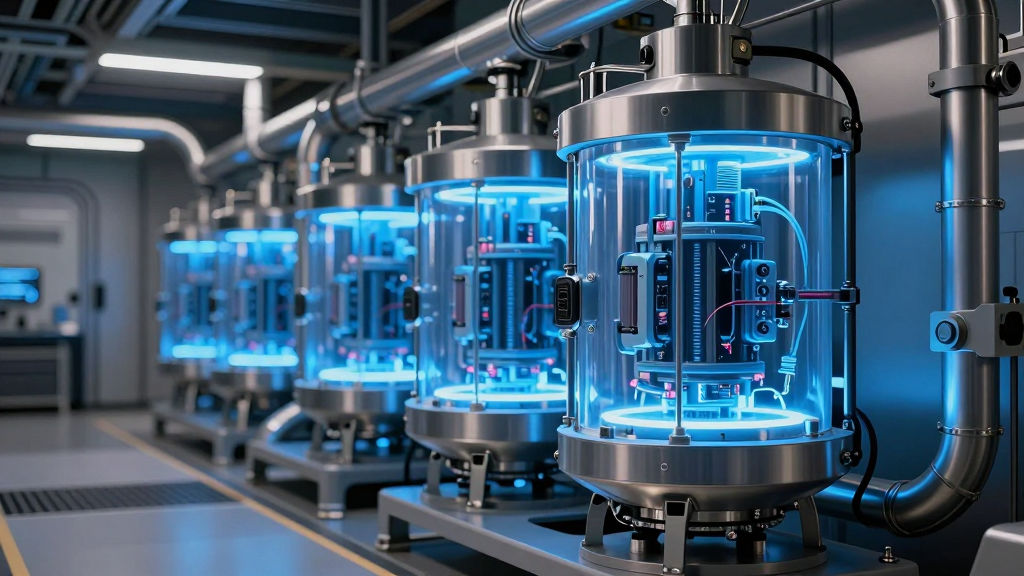
One of the most significant shifts in 2026 is the mainstream adoption of liquid immersion cooling. This technology involves submerging entire server blades in a thermally conductive, dielectric fluid. This liquid absorbs heat far more efficiently than air. As a result, data centers can achieve a much higher rack density without the risk of hardware failure.
Furthermore, immersion cooling eliminates the need for massive, energy-intensive fan arrays. This reduction in moving parts leads to lower maintenance costs and higher reliability. Many enterprises are finding that this transition is essential for sustainable scaling in 2026. By removing the air-cooling bottleneck, companies can pack more GPUs into the same physical footprint.
Moreover, the waste heat captured by these liquid systems is more “useful.” Facilities can now pipe this hot fluid into municipal heating systems or industrial processes. Consequently, the data center transforms from an energy sink into a productive heat source for the local community. This circular economy approach helps mitigate the public backlash against large-scale AI deployments.
2. AI Data Center Grids and Smart Energy Management
Managing the power draw of a modern AI cluster requires more than just a large fuse box. In 2026, we are seeing the rise of AI data center grids. These are localized, intelligent energy networks that balance load in real-time. These grids use predictive algorithms to anticipate compute spikes and adjust power distribution accordingly.
For example, a data center might throttle non-critical background training during peak hours on the public grid. Conversely, it can ramp up performance when renewable energy production is at its highest. This intelligence is crucial for maintaining stability as we face a global intelligence crisis regarding resource allocation.
Additionally, many organizations are investing in on-site energy storage. Large-scale lithium-ion or solid-state batteries act as a buffer against grid instability. As a result, these facilities can maintain “five nines” of uptime even during regional power fluctuations. This level of autonomy is a core component of building resilient private AI infrastructure that does not rely solely on the public utility.
3. Micro-Nuclear and the Quest for Energy Sovereignty
The scale of the AI power cooling crisis has forced tech giants to look toward unconventional energy sources. Small Modular Reactors (SMRs) are now a serious part of the conversation for 2026 and beyond. These compact nuclear plants provide a steady, carbon-free “baseload” of power directly to the data center.
By co-locating compute with energy production, companies eliminate the transmission losses associated with the traditional grid. This strategy provides a level of energy sovereignty that was previously unthinkable. However, the regulatory hurdles for nuclear power remain significant. Consequently, many firms are also exploring advanced geothermal and hydrogen fuel cells as alternative baseload options.
In addition to generation, the industry is focusing on “energy-aware” software development. Engineers are now writing code that optimizes for Joules per inference, not just tokens per second. This shift in mindset is helping to alleviate some of the pressure on the physical infrastructure. It proves that solving the energy crisis requires a holistic approach involving both atoms and bits.
4. Software-Defined Power and Dynamic Throttling
Innovation is also happening at the hypervisor level. Software-defined power management allows administrators to allocate “power budgets” to specific AI agents or projects. If a training run exceeds its thermal limit, the system automatically redistributes the workload to cooler parts of the cluster.
This dynamic approach is essential for preventing localized hotspots within a rack. Specifically, it uses real-time telemetry from thousands of sensors to map the thermal profile of the entire facility. As a result, the infrastructure can “breathe” and adapt to the changing demands of the models. This software layer acts as a vital safeguard against the AI power cooling crisis.
Furthermore, this management style integrates well with AI-driven energy infrastructure challenges that have plagued the industry since late 2024. By treating power as a flexible resource rather than a fixed limit, enterprises can squeeze more performance out of their existing hardware. This efficiency is the key to maintaining a competitive edge in an increasingly crowded market.
5. Biological and Material Innovations in Efficiency
The quest for efficiency has even reached the molecular level. Researchers at MIT are now using protein design AI to create new materials for energy-efficient biotech simulations. These biological breakthroughs could eventually lead to more efficient cooling fluids or even “biocomputing” elements that require less energy than silicon.
Similarly, initiatives like the Weill Cornell AIM program are developing low-power clinical AI tools. These tools are designed to run on edge devices or modest server setups rather than massive hyperscale clusters. By moving the compute closer to the data source, we reduce the need for massive, centralized data centers. This “edge-first” philosophy is a powerful weapon against the centralization of the AI power cooling crisis.
Moreover, new developments in material science are producing better heat sinks and thermal interface materials. For instance, synthetic diamond and graphene-based composites are becoming more affordable for high-end server components. These materials conduct heat away from the chip at a much faster rate than copper or aluminum. Consequently, they provide a critical “safety margin” for the next generation of super-hot processors.
Strategies for Sustainable AI Scaling
For CTOs and founders, navigating this landscape requires a multi-year strategy. You cannot simply buy more GPUs and hope for the best. You must consider the total cost of ownership, including the specialized cooling and power infrastructure required to support them.
First, audit your current thermal capacity. Many older facilities are already at their limit. Second, explore hybrid cooling solutions that combine traditional air with targeted liquid cooling for high-performance racks. Third, prioritize energy-efficient model architectures. Often, a well-tuned smaller model can outperform a bloated larger model while consuming a fraction of the power.
Finally, consider the location of your infrastructure. Proximity to low-cost, renewable energy sources is becoming more important than proximity to the end-user. The latency of light is often less of a bottleneck than the availability of a 50-megawatt substation. By planning for these physical constraints today, you ensure your AI initiatives remain viable through 2026 and beyond.
Conclusion
The AI power cooling crisis is a formidable challenge, but it is not an insurmountable one. Through a combination of liquid immersion cooling, smart grid technology, and energy-efficient model design, we are finding ways to scale responsibly. The shift toward sustainable infrastructure is no longer just a corporate social responsibility goal—it is a technical necessity.
As we move deeper into 2026, the winners in the AI space will be those who master the physical environment as well as the digital one. At Synthetic Labs, we remain committed to helping you build the private, efficient, and powerful infrastructure needed to lead in this new era. The transition may be difficult, but the result will be a more resilient and capable global intelligence network.
Subscribe for weekly AI insights to stay ahead of the curve in infrastructure and automation.
FAQ
- What is the AI power cooling crisis?
- It refers to the physical limitation where modern AI hardware generates more heat than traditional air-cooling systems can remove. This leads to high energy costs and potential hardware damage if not managed correctly.
- Why is liquid immersion cooling better than air cooling?
- Liquid is much more efficient at conducting heat than air. It allows for higher rack density, reduces noise, eliminates the need for fans, and can even repurpose waste heat for other uses.
- How can companies reduce their AI energy footprint?
- Organizations can use smaller, optimized reasoning models, implement smart grid management, and invest in on-site renewable energy sources to reduce their reliance on the public power grid.