
NVIDIA Rubin Platform: Blueprint for 2027 AI Factories
Estimated reading time: 7 minutes
- Transition to industrial-scale “extreme-codesigned” supercomputing for hyperscale AI factories.
- Introduction of the Vera Rubin NVL72 rack-scale architecture with liquid cooling.
- Massive efficiency gains: 10x reduction in inference costs and 4x fewer GPUs required for MoE model training.
- Integration of Vera CPU Olympus cores and Spectrum-X Photonics for sustainable exascale growth.
- The Evolution of Hyperscale AI Infrastructure
- Unpacking the Vera Rubin NVL72 Architecture
- Microsoft Fairwater: The New Standard for AI Factories
- How NVLink 6 Bandwidth Solves the Scaling Bottleneck
- The Unsung Power of Vera CPU Olympus Cores
- Spectrum-X Photonics and Sustainable Exascale
- Confidential Computing Rubin: Securing the Future
- Conclusion
- FAQ
- Sources
The landscape of artificial intelligence is shifting from isolated model training to the industrial-scale production of intelligence. At CES 2026, the tech world witnessed a defining moment with the launch of the NVIDIA Rubin platform. This announcement signals a transition toward “extreme-codesigned” supercomputing. For founders and CTOs, the NVIDIA Rubin platform represents more than just a performance boost. It provides a comprehensive blueprint for the next generation of hyperscale AI factories.
The transition to this new architecture addresses the most significant bottlenecks in the industry today. Specifically, the Rubin platform aims to solve the massive data movement and power consumption issues currently plaguing large-scale deployments. By integrating six distinct chips into a unified ecosystem, NVIDIA has moved beyond the “GPU-first” mentality. Consequently, enterprises can now look forward to a future where training and inference are no longer separate, expensive hurdles.
The Evolution of Hyperscale AI Infrastructure
Modern AI development has reached a point where traditional hardware configurations struggle to keep pace. As models grow toward tens of trillions of parameters, the infrastructure must evolve to support them. In the past, scaling simply meant adding more GPUs to a cluster. However, this approach often leads to diminishing returns due to networking bottlenecks and power inefficiencies.
The NVIDIA Rubin platform changes this trajectory by focusing on the entire data center rack as a single unit of compute. This shift is essential for organizations attempting to move beyond basic chatbots into the realm of agentic AI. Developing a private AI infrastructure requires a deep understanding of how these hardware layers interact. With Rubin, the interaction is seamless, allowing for a 10x reduction in inference token costs.
Furthermore, the Rubin architecture is designed for the era of Mixture-of-Experts (MoE) models. These models require massive amounts of memory bandwidth and rapid communication between different parts of the system. By reducing the number of GPUs required for training by 4x compared to the previous Blackwell generation, NVIDIA is making exascale computing more accessible. This efficiency is a direct result of “extreme codesign,” where every component is built to complement the others.
Unpacking the Vera Rubin NVL72 Architecture
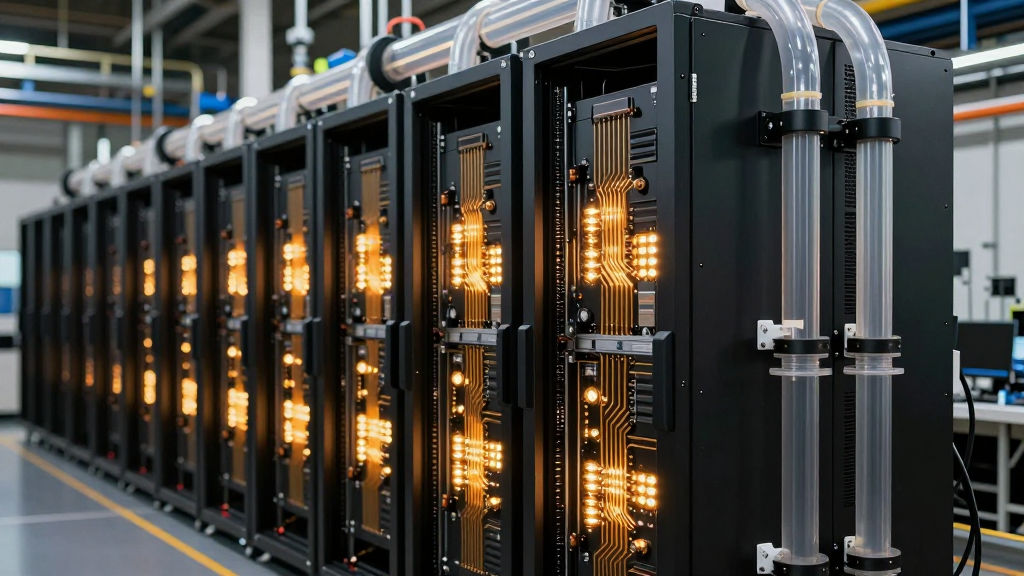
At the heart of this new blueprint is the Vera Rubin NVL72. This rack-scale solution is the building block for the modern AI factory. It houses the Vera Rubin Superchips, which combine the power of the Rubin GPU and the Vera CPU. By utilizing the liquid-cooled NVL72 configuration, providers can pack more compute into a smaller physical footprint.
The Vera Rubin NVL72 is not just a collection of servers. Instead, it acts as a single, massive GPU. This is made possible by the sixth-generation NVLink, which provides staggering interconnect speeds. Consequently, data flows across the entire rack without the latency spikes that usually hinder large-scale training. For developers, this means the software sees one giant pool of memory and compute, simplifying the deployment of complex AI agents.
Moreover, the modularity of the NVL72 tray design allows for faster maintenance and upgrades. In a production environment, downtime is the enemy of innovation. The inclusion of the RAS Engine 2.0 ensures that the system can perform real-time health checks. If a component fails, the system identifies it immediately, often resolving the issue before it impacts the workload. This level of reliability is critical for firms managing AI energy infrastructure challenges in high-density environments.
Microsoft Fairwater: The New Standard for AI Factories
One of the most significant announcements involving the NVIDIA Rubin platform is the partnership with Microsoft. Through the “Fairwater” initiative, Microsoft is redesigning its entire data center strategy. Fairwater AI superfactories are specifically engineered to house hundreds of thousands of Vera Rubin NVL72 units. This level of planning ensures that the infrastructure can support the next decade of AI growth.
Microsoft’s strategic AI datacenter planning allows for the seamless deployment of the Rubin platform at a scale previously thought impossible. By standardizing the power, cooling, and networking requirements, Microsoft has created a repeatable template for intelligence production. For enterprise customers, this means Azure will provide a highly stable environment for running the most demanding agentic workflows.
Additionally, the Fairwater factories focus on operational efficiency. They utilize advanced cooling technologies to manage the heat generated by the dense Rubin racks. This is not just a technical necessity but an economic one. As the demand for AI grows, the cost of power and cooling becomes a primary driver of the total cost of ownership (TCO). By optimizing these factors, Microsoft and NVIDIA are setting a new benchmark for the industry.
How NVLink 6 Bandwidth Solves the Scaling Bottleneck
The biggest challenge in scaling AI is often not the compute power, but the speed at which data moves. When thousands of GPUs need to synchronize their parameters, the network often becomes the bottleneck. The NVIDIA Rubin platform solves this through NVLink 6 bandwidth, which provides 3.6TB/s per GPU. This represents a massive leap over previous generations.
A single Vera Rubin NVL72 rack boasts an aggregate bandwidth of 260TB/s. This incredible throughput allows for the efficient training of trillion-parameter models. Specifically, it enables the high-frequency communication required for “agentic AI scaling.” When multiple AI agents work together to solve a task, they must share context and data instantly. NVLink 6 ensures that this communication happens at the speed of the processor.
Furthermore, the high bandwidth reduces the “tail latency” that often plagues large clusters. In simple terms, it prevents a single slow connection from holding up the entire supercomputer. Consequently, the utilization rate of the hardware stays high, ensuring that organizations get the most value out of their investment. This is a critical factor for CoreWeave Rubin integration, where cloud customers pay for compute time.
The Unsung Power of Vera CPU Olympus Cores
While the GPU usually gets the spotlight, the Vera CPU Olympus cores are the unsung heroes of the Rubin platform. The Vera CPU features 88 Arm-based Olympus cores designed for extreme data movement. In the world of agentic AI, the CPU is responsible for orchestrating the flow of data between the storage, the network, and the GPU.
The Vera CPU provides 1.2TB/s of memory bandwidth. This is significant because it allows the CPU to keep up with the massive throughput of the Rubin GPUs. Without this balance, the GPUs would often sit idle while waiting for the CPU to process data. By utilizing spatial multithreading, the Olympus cores can handle multiple data streams simultaneously.
Moreover, the Vera CPU eliminates the latency typically associated with the PCIe bus. By using an NVLink-C2C (Chip-to-Chip) interconnect, the CPU and GPU share a high-speed direct link. This architecture is particularly beneficial for inference tasks where the model needs to retrieve information from a database rapidly. As a result, agentic AI systems feel more responsive and capable of handling real-world complexity.
Spectrum-X Photonics and Sustainable Exascale
As AI factories grow to include millions of GPUs, traditional networking technologies reach their physical limits. The Rubin platform introduces Spectrum-X Photonics to address this. By using light instead of electricity for long-distance data transmission, NVIDIA achieves a 5x gain in power efficiency and uptime.
Spectrum-X Photonics is crucial for “scale-out” networking. While NVLink handles communication within a rack, Spectrum-X connects thousands of racks together. This photonics-based approach reduces the amount of cabling required and lowers the energy footprint of the network. In an era where sustainability is a boardroom priority, these efficiency gains are a major selling point for the NVIDIA Rubin platform.
Additionally, the Spectrum-6 Ethernet Switch and ConnectX-9 SuperNIC work in tandem to provide a lossless network fabric. This ensures that no data packets are dropped during the massive transfers required for AI training. For researchers building small reasoning AI models, this stable networking environment allows for faster iteration and more predictable results.
Confidential Computing Rubin: Securing the Future
Security is a paramount concern for enterprises moving their sensitive data into AI models. The NVIDIA Rubin platform introduces the third generation of Confidential Computing. This technology ensures that data remains encrypted even while it is being processed by the GPU and CPU.
Confidential Computing Rubin extends this protection across the entire NVLink fabric. This means that data moving between GPUs in a rack is just as secure as data sitting in an encrypted database. This is a game-changer for regulated industries like finance and healthcare. They can now utilize the full power of the Vera Rubin NVL72 without compromising their data privacy standards.
Furthermore, partnerships with companies like Red Hat bring this security to the software layer. By optimizing Red Hat Enterprise Linux and OpenShift for the Rubin platform, NVIDIA ensures a secure, open-source-friendly stack. This allows developers to build viral open-source AI tools with the confidence that their underlying infrastructure is hardened against attacks.
Conclusion
The arrival of the NVIDIA Rubin platform marks the beginning of the industrial age of AI. By combining the Vera CPU Olympus cores, sixth-gen NVLink, and Spectrum-X Photonics, NVIDIA has created a unified system that redefines performance. The blueprint provided by the Vera Rubin NVL72 and the Microsoft Fairwater factories offers a clear path for enterprises to scale their AI ambitions.
Ultimately, the goal of the NVIDIA Rubin platform is to make intelligence cheaper and more accessible. With a 10x reduction in inference costs and a focus on agentic AI scaling, the economic barriers to entry are falling. As we look toward 2027, the AI factory will become the engine of corporate innovation. Organizations that adopt this blueprint today will be the ones leading the market tomorrow.
Subscribe to Synthetic Labs for weekly AI insights and deep dives into the future of infrastructure.
FAQ
- What is the main advantage of the NVIDIA Rubin platform over Blackwell?
- The Rubin platform offers a 10x reduction in inference token costs and requires 4x fewer GPUs to train Mixture-of-Experts (MoE) models. It also introduces the Vera CPU and sixth-generation NVLink for superior data movement.
- When will the Vera Rubin NVL72 be available for purchase?
- NVIDIA has announced that the Rubin platform is currently in full production, with partner availability expected in the second half of 2026.
- What are Vera CPU Olympus cores?
- These are 88 Arm-based cores integrated into the Vera CPU. They provide 1.2TB/s of memory bandwidth, specifically designed to handle the high-speed data orchestration required for agentic AI.
- How does Spectrum-X Photonics improve AI factories?
- Spectrum-X Photonics uses light-based data transmission to provide 5x better power efficiency and uptime. This allows for scaling AI clusters to millions of GPUs without the bottlenecks of traditional copper networking.
Sources
- NVIDIA Rubin Platform AI Supercomputer News
- NVIDIA CES 2026 Special Presentation
- Aragon Research on NVIDIA Rubin
- CRN: Vera Rubin Ecosystem
- NVIDIA CES 2026 Special Presentation
- NVIDIA Rubin and AMD Helios Memory Comparison
- Microsoft’s strategic AI datacenter planning enables seamless large-scale NVIDIA Rubin deployments
- Naddod: Rubin Platform Insights