
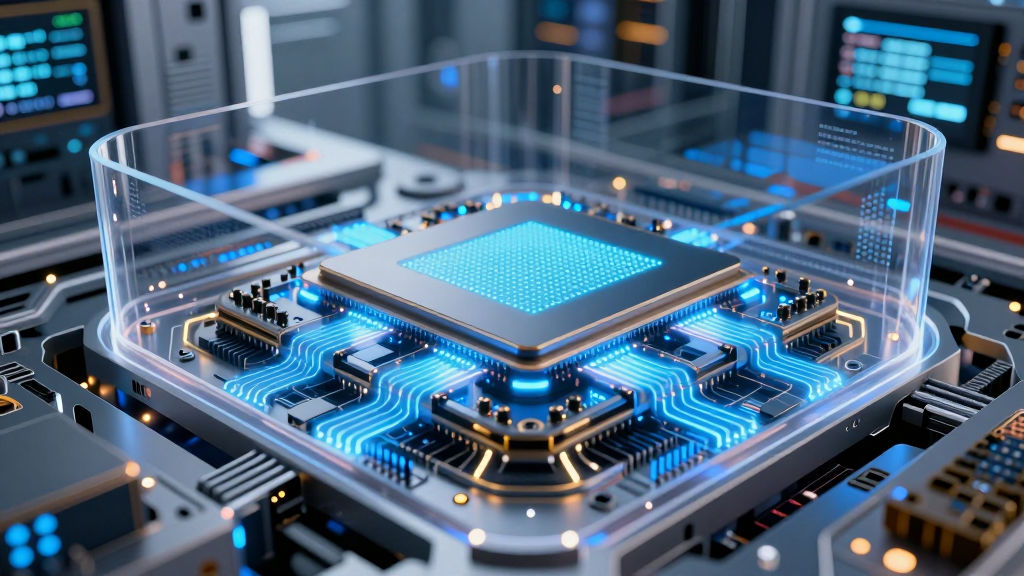
Securing the Future: The NVIDIA Rubin Platform Security Model
Estimated reading time: 7 minutes
- Comprehensive six-chip architecture designed for secure, extreme-codesigned AI supercomputing.
- Advanced hardware-level security via BlueField-4 DPU and third-generation Confidential Computing.
- Unprecedented memory bandwidth of 22 TB/s through HBM4 Rubin GPUs.
- Collaborative ecosystem with industry leaders like Microsoft Azure and Red Hat for enterprise-grade deployment.
- Scheduled for a wide-scale H2 2026 rollout across global datacenters.
- The Six-Chip Architecture of the Rubin Platform
- BlueField-4 DPU: The Sentinel of the AI Factory
- Vera CPU Olympus Cores and Intelligent Orchestration
- Rack-Scale Security with Confidential Computing
- High-Speed Connectivity via ConnectX-9 SuperNIC
- Spectrum-6 Ethernet and Photonics Innovation
- Partner Ecosystem and the H2 2026 Rollout
- Conclusion: The New Standard for Private AI
- Frequently Asked Questions
- Sources
The artificial intelligence landscape shifted significantly during the recent CES 2026 announcements. NVIDIA unveiled the NVIDIA Rubin platform, marking a new era of extreme-codesigned AI supercomputing. This architecture represents more than just a performance boost for large-scale models. It introduces a comprehensive security framework designed for the massive “AI factories” of the future.
As enterprises move toward agentic AI and long-context reasoning, data privacy becomes the primary concern. The NVIDIA Rubin platform addresses these challenges by integrating six specialized chips into a singular, cohesive system. This approach ensures that sensitive data remains protected even when processed at a massive scale. Consequently, businesses can finally deploy high-performance AI without compromising their proprietary information or infrastructure integrity.
The Six-Chip Architecture of the Rubin Platform
The NVIDIA Rubin platform is not a single piece of hardware. Instead, it is a sophisticated ecosystem comprising six distinct chips designed to work in perfect harmony. These components include the Rubin GPU, the Vera CPU, and advanced networking hardware. Each chip plays a vital role in maintaining the performance and security of the entire supercomputer.
NVIDIA built the Rubin GPU with 224 Streaming Multiprocessors (SMs) and sixth-generation Tensor Cores. This GPU utilizes HBM4 Rubin GPU memory, which provides a staggering 22 TB/s of bandwidth. This massive throughput allows the system to handle Mixture-of-Experts (MoE) models with unprecedented efficiency. However, raw power requires intelligent orchestration to prevent bottlenecks and security vulnerabilities.
The platform relies on the Vera CPU Olympus cores to manage complex logic and control flows. With 88 Arm-compatible cores, this CPU ensures that data moves quickly between storage and compute layers. This tight integration allows the system to scale up to million-GPU factories while maintaining low latency. Furthermore, the architecture supports synchronized scale-out operations for the most demanding enterprise workloads.
BlueField-4 DPU: The Sentinel of the AI Factory
Security in the modern datacenter often starts at the network edge. The BlueField-4 DPU acts as the primary security layer within the Rubin architecture. This Data Processing Unit features a dual-die design with 64 Grace CPU cores. These cores handle infrastructure tasks, such as encryption and firewall management, without taxing the main host processors.
By offloading these tasks to the BlueField-4 DPU, the system maintains peak performance for AI training and inference. Specifically, this chip enables hardware-accelerated security for multi-tenant cloud environments. In a shared datacenter, different companies often run workloads on the same physical hardware. The BlueField-4 ensures that data from one user remains completely invisible to others.
Moreover, the DPU facilitates third-generation Confidential Computing across the entire rack. This technology creates a “trusted execution environment” where data is encrypted even while it is being processed. Because the BlueField-4 DPU manages the keys and authentication, the risk of data leaks is significantly reduced. This level of protection is essential for companies developing Private AI Infrastructure to keep their competitive advantages secure.
Vera CPU Olympus Cores and Intelligent Orchestration
The Vera CPU Olympus cores represent a major milestone in NVIDIA’s silicon strategy. These 88 cores are fully Arm-compatible, allowing them to run a wide range of enterprise software natively. This compatibility is crucial for organizations that want to integrate Rubin into existing Linux-based stacks. For example, Red Hat and NVIDIA are collaborating to optimize OpenShift for these new chips.
In previous generations, the CPU often struggled to keep up with the massive data demands of the GPU. However, the Vera CPU solves this problem through high-bandwidth links and dedicated memory paths. It handles the “pre-processing” and “post-processing” of data, ensuring the GPUs never sit idle. This orchestration is particularly important when running Small Reasoning AI Models that require rapid logic switching.
Furthermore, the Vera CPU works closely with the ConnectX-9 SuperNIC to manage external data transfers. This combination allows for a “zero-trust” security model at the hardware level. Every data packet entering the system undergoes rigorous verification before reaching the Rubin GPUs. Consequently, the Vera CPU serves as both a performance accelerator and a critical gatekeeper for the entire platform.
Rack-Scale Security with Confidential Computing
The NVIDIA Rubin platform introduces third-generation Confidential Computing. This feature extends security beyond the individual chip to the entire server rack. Traditionally, data was vulnerable when traveling across cables between different servers. Rubin eliminates this risk by encrypting the NVLink 6 connections that tie the GPUs together.
This rack-scale security is vital for training models on sensitive datasets, such as medical records or financial history. The system protects the entire data domain, including the CPU, GPU, and memory. Therefore, even if an attacker gains physical access to the datacenter, they cannot read the information stored in the system. NVIDIA’s second-generation RAS (Reliability, Availability, and Serviceability) Engine further enhances this by providing advanced fault tolerance.
As a result, the Rubin platform provides a “fortress” for proprietary AI development. According to Inside the NVIDIA Rubin Platform: Six New Chips, this architecture enables massive scale-up without sacrificing security. This capability allows researchers to push the boundaries of AI while following strict compliance and privacy regulations.
High-Speed Connectivity via ConnectX-9 SuperNIC
Networking is the backbone of any AI supercomputer. The ConnectX-9 SuperNIC provides the high-speed interface needed to move petabytes of data across the AI factory. This network card supports massive throughput, ensuring that data-hungry GPUs are constantly fed with information. Without this level of connectivity, the performance of the HBM4 Rubin GPU would be wasted.
The ConnectX-9 also supports advanced features like adaptive routing and congestion control. These technologies prevent data “traffic jams” that can slow down large-scale training jobs. Specifically, the SuperNIC works with the Spectrum-6 Ethernet switch to create a seamless network fabric. This fabric is designed for “bursty” AI traffic, where millions of small data packets are sent simultaneously.
In addition to speed, the ConnectX-9 SuperNIC provides hardware-based telemetry. This allows administrators to monitor the health and security of the network in real-time. If the system detects unusual data patterns, it can automatically isolate the affected nodes. This proactive approach to security ensures that the AI factory remains operational and secure 24/7.
Spectrum-6 Ethernet and Photonics Innovation
The Spectrum-6 Ethernet switch is the final piece of the Rubin networking puzzle. It offers a massive 102.4 Tb/s of bandwidth, which is necessary for million-GPU clusters. One of the most significant innovations in this switch is the use of co-packaged optics (photonics). By using light instead of electricity to move data, the system reduces energy consumption and heat.
This shift to photonics is essential for the sustainability of large-scale AI. As datacenters grow, the energy required for cooling and networking becomes a major challenge. The Spectrum-6 switch addresses this by providing more bandwidth per watt than previous generations. Consequently, organizations can scale their AI capabilities without seeing a linear increase in their power bills.
Moreover, the Spectrum-6 switch supports the NVLink 6 bandwidth requirements for ultra-fast GPU-to-GPU communication. This allows the system to behave like one giant processor rather than thousands of separate units. For businesses using NVIDIA Rubin Platform Supercomputer integration, this means faster training times and lower operational costs.
Partner Ecosystem and the H2 2026 Rollout
NVIDIA is not building the Rubin ecosystem alone. During CES 2026, the company announced nine major hardware and cloud partners. Firms like Microsoft Azure are already designing specialized datacenter racks for the Vera Rubin NVL72 architecture. These racks use cable-free designs to improve airflow and make servicing 18 times faster.
Microsoft Azure’s strategic planning allows for seamless deployments of the NVIDIA Rubin platform for enterprise and research tasks. These partnerships ensure that the hardware is available to a wide range of users, from startups to global corporations. Furthermore, the collaboration with Red Hat provides a stable, AI-optimized software stack for Rubin users.
The rollout of the Rubin platform is scheduled for the second half of 2026. This timeline gives enterprises about six months to prepare their infrastructure and software for the transition. By the time the hardware arrives, the ecosystem of drivers, libraries, and models will be ready for production. This rapid adoption cycle is a testament to NVIDIA’s dominance in the AI hardware market.
Conclusion: The New Standard for Private AI
The NVIDIA Rubin platform represents a fundamental shift in how we think about AI infrastructure. By combining the Vera CPU Olympus cores, BlueField-4 DPU, and ConnectX-9 SuperNIC, NVIDIA has created a system that is both incredibly powerful and inherently secure. The platform’s focus on Confidential Computing and rack-scale security makes it the ideal choice for companies dealing with sensitive data.
As we look toward the H2 2026 rollout, the impact of this technology is clear. It lowers the economic barriers to high-end AI while providing the security features that modern enterprises demand. Whether you are building autonomous vehicles with Alpamayo or training proprietary reasoning models, the Rubin platform provides the foundation you need.
The era of the insecure AI experiment is over. With the NVIDIA Rubin platform, the secure AI factory has finally arrived. This advancement ensures that the next decade of AI growth will be built on a foundation of privacy and trust.
Subscribe for weekly AI insights to stay ahead of the curve as Synthetic Labs continues to track the evolution of the Rubin ecosystem and its impact on private infrastructure.
Frequently Asked Questions
- What makes the NVIDIA Rubin platform different from Blackwell?
- The Rubin platform features a new six-chip architecture, including the Vera CPU and HBM4 memory. It offers a 10x reduction in inference costs and uses 4x fewer GPUs for training complex Mixture-of-Experts models compared to the previous Blackwell generation.
- How does the BlueField-4 DPU improve security?
- The BlueField-4 DPU offloads infrastructure and security tasks from the main CPU. It enables third-generation Confidential Computing, which encrypts data across the entire rack, protecting it from unauthorized access during processing and transit.
- What are the Vera CPU Olympus cores?
- These are 88 Arm-compatible cores integrated into the Vera CPU. They handle the logic and orchestration required to keep the Rubin GPUs running at peak efficiency, ensuring smooth data flow for large-scale AI workloads.
- When will the NVIDIA Rubin platform be available?
- NVIDIA announced that partner availability for the Rubin platform will begin in the second half of 2026. Major cloud providers like Microsoft Azure and CoreWeave are already preparing their datacenters for the rollout.
Sources
- NVIDIA Rubin Platform Supercomputer
- Microsoft Azure Strategic AI Planning for Rubin
- Inside the NVIDIA Rubin Platform: Six New Chips
- NVIDIA Rubin Production and Hardware Advances
- NVIDIA CES 2026 Special Presentation
- NVIDIA Special Presentation at CES 2026 (YouTube)
- NVIDIA Rubin Platform AI Supercomputer with Six New Chips
- NVIDIA Vera Rubin: Nine Hardware, Cloud Companies Build Out Ecosystem
- NVIDIA is still working with suppliers on RAM chips for Rubin