
Scaling Private AI with NVIDIA Rubin Production and HBM4
Estimated reading time: 7 minutes
- The NVIDIA Rubin platform delivers a 10x reduction in inference costs and a 4x improvement in training efficiency for MoE models.
- The Vera Rubin NVL72 rack-scale solution reduces assembly time by 18x through a modular, cable-free design.
- HBM4 memory integration provides a massive 22 TB/s bandwidth, addressing long-context reasoning bottlenecks.
- Hardware-based speculative decoding and Spectrum-X Ethernet Photonics enable faster, more energy-efficient agentic and physical AI deployments.
- The Architecture of the Vera Rubin NVL72 Rack
- HBM4 AI Bandwidth and the Memory Revolution
- Accelerating Agentic AI with Speculative Decoding
- Alpamayo AV Models and Physical AI Convergence
- Spectrum-X Ethernet Photonics and Power Efficiency
- Sovereign AI and the Global Partner Ecosystem
- Comparing the Giants: AMD Helios vs. NVIDIA Rubin
- Conclusion: Preparing for the Rubin Era
- FAQ
- Sources
The landscape of artificial intelligence underwent a tectonic shift at CES 2026. NVIDIA’s announcement of NVIDIA Rubin production marks the transition from experimental large language models to industrialized AI factories. This new platform does not just offer a faster chip. Instead, it introduces a complete six-chip ecosystem designed to power the next generation of agentic automation. For leaders at Synthetic Labs and beyond, this represents the most significant leap in private infrastructure to date.
Businesses now face a critical choice regarding their technical debt. The Rubin platform delivers a 10x reduction in inference token costs compared to previous generations. Furthermore, it requires four times fewer GPUs to train Mixture-of-Experts (MoE) models. As we move into the second half of 2026, the integration of these systems by partners like CoreWeave and Microsoft Azure will redefine how enterprises deploy sovereign AI.
The Architecture of the Vera Rubin NVL72 Rack
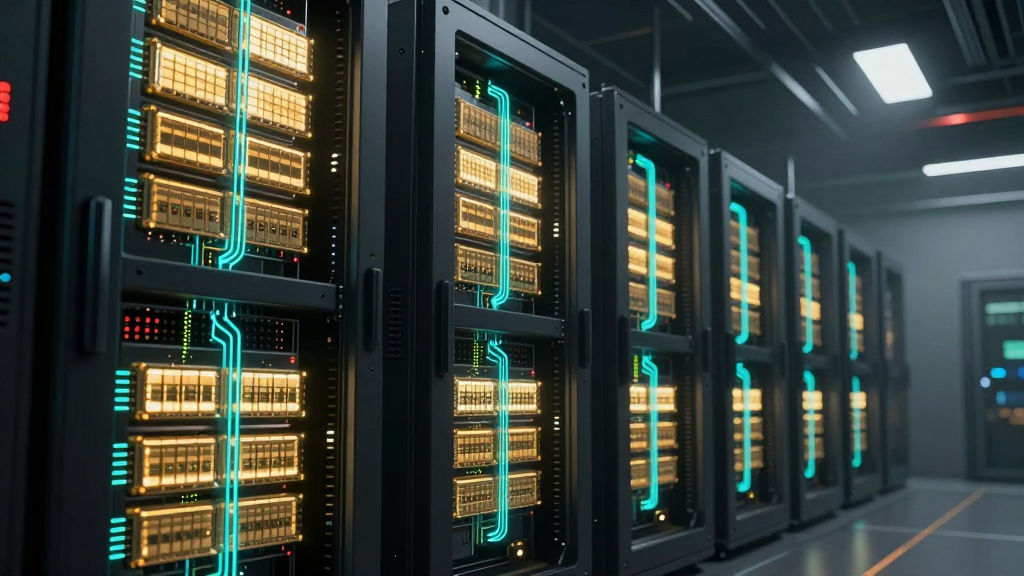
The Vera Rubin NVL72 stands as the centerpiece of this new era. It is a rack-scale solution that integrates the Vera CPU and the Rubin GPU into a cohesive unit. This design solves the “cabling nightmare” that previously plagued large-scale data centers. By using a modular, cable-free design, NVIDIA has managed to cut assembly time by 18x compared to the Blackwell generation.
This efficiency matters because speed of deployment is now a competitive advantage. Companies can build private AI infrastructure in weeks rather than months. The Vera CPU features 88 Olympus Arm cores, which handle the complex orchestration required for modern workloads. Meanwhile, the Rubin GPU provides the raw compute power needed for the world’s most demanding models.
The inclusion of the 2nd-gen RAS (Reliability, Availability, and Serviceability) Engine ensures high uptime. This engine identifies potential hardware failures before they crash a training run. As a result, developers spend less time troubleshooting and more time innovating. This reliability is essential for scaling million-GPU AI factories.
HBM4 AI Bandwidth and the Memory Revolution
Memory bottlenecks have long restricted AI performance. However, the move to HBM4 AI bandwidth solves this issue with overwhelming force. Each Rubin GPU features 288GB of HBM4 memory. This provides a staggering 22 TB/s of bandwidth, representing a 2.75x leap over the Blackwell architecture.
High bandwidth allows models to access data faster. This is particularly important for “long-context” reasoning, where the AI must remember thousands of pages of information simultaneously. When combined with the NVLink 6 interconnect, which provides 3.6 TB/s of GPU-to-GPU speed, the system acts as a single, massive computer.
Furthermore, the introduction of NVFP4 compute allows for 50 petaFLOPS of performance. This new numerical format maintains high accuracy while drastically reducing the energy required for calculations. Because energy costs represent the largest expense in AI operations, this efficiency directly improves the bottom line for enterprise users.
Accelerating Agentic AI with Speculative Decoding
The shift toward agentic AI requires models that can “think” and “reason” in real time. Standard autoregressive models often feel slow during complex conversations. To solve this, NVIDIA integrated a 4th-gen Transformer Engine with hardware-based speculative decoding into the Rubin GPU.
Speculative decoding uses a smaller, faster model to predict the next few tokens in a sentence. The larger Rubin model then verifies these predictions in parallel. This hardware-software codesign results in a 3-4x speedup for conversational AI. It makes interactions feel instantaneous rather than staggered.
These advancements are crucial for small reasoning AI models that need to perform multi-step tasks. When an AI agent must navigate a file system or write code, every millisecond counts. By reducing latency at the hardware level, Synthetic Labs can help clients build more responsive automation workflows.
Alpamayo AV Models and Physical AI Convergence
NVIDIA is also pushing AI into the physical world through Alpamayo AV models. These open reasoning models focus on autonomous vehicles (AV) and robotics. Unlike traditional models that just label objects, Alpamayo generates complex, multi-camera scenarios to simulate real-world physics.
This technology allows developers to test edge cases without putting real cars on the road. For example, Alpamayo can predict physical trajectories in a rainstorm or simulate a sudden pedestrian crossing. This convergence of vision, language, and action is the key to achieving Level 4 autonomy.
Non-technical readers should view Alpamayo as a “world simulator.” It creates a digital twin of reality where AI agents can practice safely. This has massive implications for urban planning and industrial AI automation. By democratizing these high-fidelity simulations, NVIDIA is accelerating the arrival of truly autonomous physical systems.
Spectrum-X Ethernet Photonics and Power Efficiency
Scaling to a million GPUs requires more than just fast chips; it requires a revolution in networking. The Spectrum-X Ethernet Photonics platform addresses the power and heat challenges of massive data centers. By using light instead of electricity for data transmission, NVIDIA has achieved 5x better power efficiency in the networking stack.
The platform includes the ConnectX-9 SuperNIC and the BlueField-4 DPU. These components offload networking tasks from the CPU, ensuring that every ounce of compute power goes toward AI. This is a critical development for companies concerned about the environmental impact of their tech stack.
Moreover, the Spectrum-6 Ethernet Switch enables seamless communication across the entire fabric. This allows for “east-west” traffic flow, which is necessary for training models across thousands of nodes. Without this specialized networking, the high HBM4 AI bandwidth of the GPUs would be wasted due to network congestion.
Sovereign AI and the Global Partner Ecosystem
One of the most significant themes of CES 2026 was the rise of Sovereign AI. Governments and enterprises want to keep their data within their own borders. To support this, NVIDIA’s partner ecosystem is building localized “Vera Rubin” clusters.
CoreWeave is leading the charge with its CoreWeave Rubin integration, offering multi-architecture support. This allows firms to run Blackwell and Rubin workloads side-by-side. Meanwhile, Microsoft Azure is optimizing its cloud for Confidential Computing Rubin. This technology encrypts data even while it is being processed in the GPU.
Other partners, including various hardware and cloud firms, are developing HGX NVL8 systems. These smaller, eight-GPU configurations bring Rubin power to standard enterprise data centers. This ecosystem approach ensures that NVIDIA Rubin production isn’t just for tech giants, but for any organization requiring high-performance private infrastructure.
Comparing the Giants: AMD Helios vs. NVIDIA Rubin
The competition in the AI space remains fierce. At CES, the industry also saw the emergence of AMD Helios. This competition centers heavily on the “Memory Wars.” While AMD focuses on high-capacity memory, NVIDIA’s Rubin emphasizes the tight integration of the entire stack.
The primary difference lies in the “extreme codesign” philosophy. NVIDIA designs the chip, the software, the network, and the cooling systems together. This holistic approach often results in better real-world performance than just having high raw specs. However, the presence of strong competitors like AMD ensures that innovation continues at a breakneck pace.
For CTOs, this competition is beneficial. It drives down prices and forces vendors to provide better support. At Synthetic Labs, we monitor these hardware shifts closely to ensure our clients deploy their AI coding best practices on the most cost-effective hardware available.
Conclusion: Preparing for the Rubin Era
The announcement of NVIDIA Rubin production marks a new chapter in the history of computing. By combining the Vera CPU, the Rubin GPU, and HBM4 memory, NVIDIA has created a platform that can handle the sheer scale of future AI demands. From the 18x faster assembly of the Vera Rubin NVL72 to the physics-based reasoning of Alpamayo AV models, the innovations are vast.
For businesses, the message is clear: the infrastructure for the next decade is being built today. Those who adopt these technologies early will benefit from 10x lower costs and significantly faster reasoning. Whether you are building private AI factories or deploying autonomous robots, the Rubin platform provides the foundation you need.
Synthetic Labs remains committed to helping you navigate these complex changes. As these systems hit full production in H2 2026, we will be here to provide the strategic guidance and technical expertise required for success.
Subscribe for weekly AI insights and stay ahead of the curve.
FAQ
- What is the main benefit of NVIDIA Rubin production for small businesses?
- The primary benefit is the 10x reduction in inference costs. This makes running large, sophisticated models much more affordable for smaller enterprises.
- How does HBM4 AI bandwidth improve AI performance?
- It allows the GPU to access 288GB of data at 22 TB/s. This speed is essential for complex reasoning and handling massive amounts of information without slowing down.
- What are Alpamayo AV models used for?
- These are open models designed for autonomous vehicles and robotics. They use AI to simulate real-world physics and multi-camera scenarios for safer testing.
- What is the Vera Rubin NVL72?
- It is a full-rack solution that combines 72 GPUs and CPUs into one system. Its modular design allows data centers to be built 18x faster than previous versions.
Sources
- NVIDIA Touts Rubin Platform Production
- NVIDIA Rubin Platform AI Supercomputer
- NVIDIA Rubin Full Production CES 2026 AI Infrastructure
- Inside the NVIDIA Rubin Platform: Six New Chips
- NVIDIA 2026 CES Special Presentation
- NVIDIA Rubin Reshapes the AI Factory
- NVIDIA CES 2026 Keynote
- CRN: Nine Partners Build Rubin Ecosystem
- At CES, NVIDIA Rubin and AMD Helios Made Memory the Future of AI
- NVIDIA Rubin Platform AI Supercomputer with Six New Chips