
Inside the NVIDIA Rubin Platform: Scaling AI Factory Efficiency
Estimated reading time: 7 minutes
- Economic Turnaround: The Rubin platform delivers ten times lower inference costs compared to previous architectures.
- Architectural Synergy: Integrates six specialized chips, including the Vera CPU and HBM4-powered Rubin GPU, into a unified “AI Factory.”
- Enhanced Efficiency: Requires four times fewer GPUs to train complex Mixture of Experts (MoE) models.
- Scale and Security: Features 3.6 TB/s GPU-to-GPU bandwidth and advanced Confidential Computing for secure private AI infrastructure.
- The Architectural Shift: Six Chips, One AI Supercomputer
- The Vera CPU: Redefining Arm-Based Performance
- The Rubin GPU and the HBM4 Revolution
- Networking at Scale with NVLink 6 and Spectrum-6
- Secure Private AI with BlueField-4 and Confidential Computing
- The Vera Rubin NVL72: The Modern AI Building Block
- Microsoft Fairwater and the Partner Ecosystem
- Transforming Agentic AI and Inference Costs
- Conclusion
- FAQ
- Sources
The artificial intelligence landscape moves at a breathtaking pace. Just as enterprises began integrating Blackwell architecture, the industry shifted again at CES 2026. The unveiling of the NVIDIA Rubin platform marks a definitive turning point for generative media and private infrastructure. This new architecture does not just offer an incremental update. Instead, it redefines the fundamental economics of intelligence by delivering ten times lower inference costs.
Synthetic Labs focuses on helping organizations navigate these rapid transitions. Consequently, we see the NVIDIA Rubin platform as the essential foundation for the next generation of agentic AI. This platform integrates six specialized chips into a single, cohesive supercomputer. By doing so, it addresses the massive power and scaling challenges currently facing global data centers. This article explores how these innovations will reshape your AI strategy for 2026 and beyond.
The Architectural Shift: Six Chips, One AI Supercomputer
The NVIDIA Rubin platform represents a departure from traditional component-based design. Historically, engineers selected CPUs, GPUs, and networking cards from separate roadmaps. However, NVIDIA has now unified these elements into a single production-ready environment. This “AI Factory” approach ensures that every component works in perfect harmony to eliminate data bottlenecks.
At the heart of this system lies a massive leap in efficiency. For example, the Rubin architecture requires four times fewer GPUs to train Mixture of Experts (MoE) models compared to previous generations. This efficiency stems from the tight integration of the Vera CPU and the Rubin GPU. Furthermore, the platform introduces the NVLink 6 switch, which provides unprecedented 3.6 TB/s GPU-to-GPU bandwidth.
The Vera CPU: Redefining Arm-Based Performance
Computing for AI requires more than just raw graphical power. Specifically, complex AI workloads need a robust central processor to manage data orchestration and system logic. To meet this need, the NVIDIA Rubin platform introduces the Vera CPU. This processor features 88 Olympus Arm-compatible cores designed specifically for high-throughput AI environments.
The Vera CPU does not operate in isolation. Instead, it serves as the command center for the entire rack. Because it uses the Arm architecture, it offers superior energy efficiency compared to traditional x86 designs. This is critical because AI energy infrastructure challenges remain a top concern for CTOs worldwide. By reducing the power overhead of the CPU, enterprises can allocate more energy to actual model inference.
The Rubin GPU and the HBM4 Revolution
The true engine of this platform is the HBM4 Rubin GPU. This chip features 224 Streaming Multiprocessors (SMs) and utilizes 6th-gen Tensor Cores. These cores now support NVFP4 and FP8 precision, allowing for highly compressed yet accurate mathematical operations. However, the most significant advancement lies in the memory subsystem.
The Rubin GPU incorporates up to 288 GB of HBM4 memory. This high-bandwidth memory reaches speeds of 22 TB/s. As a result, the GPU can handle much larger datasets without swapping information to slower storage. This capability is vital for long-context reasoning. If your team is working with small reasoning AI models, the Rubin GPU provides the memory headroom needed to keep those models fast and responsive.
Networking at Scale with NVLink 6 and Spectrum-6
Scaling an AI model to millions of users requires more than one chip. It requires a massive network of interconnected hardware. To facilitate this, NVIDIA introduced the NVLink 6 switch and Spectrum-6 Ethernet. These components act as the nervous system of the AI factory.
The NVLink 6 switch provides a staggering 3.6 TB/s of bandwidth between GPUs. This allows a cluster of chips to act as one single, massive processor. Simultaneously, the Spectrum-6 Ethernet switch handles north-south traffic at 102.4 Tb/s. This switch uses co-packaged optics to move data with minimal latency. Consequently, developers can deploy massive models across thousands of nodes without facing the communication delays that plagued earlier architectures.
Secure Private AI with BlueField-4 and Confidential Computing
Security is no longer an afterthought in AI deployment. Many of our clients are moving toward private AI infrastructure to protect proprietary data. The NVIDIA Rubin platform addresses these concerns through the BlueField-4 DPU and 3rd-gen Confidential Computing Rubin features.
The BlueField-4 DPU combines 64 Grace CPU cores with advanced networking hardware. This chip offloads security tasks and data management from the main GPU. As a result, the system can encrypt data in transit without slowing down AI performance. Furthermore, the 2nd-gen RAS (Reliability, Availability, and Serviceability) Engine provides real-time health checks. This ensures that mission-critical AI applications in finance or healthcare stay online even if a minor hardware fault occurs.
The Vera Rubin NVL72: The Modern AI Building Block
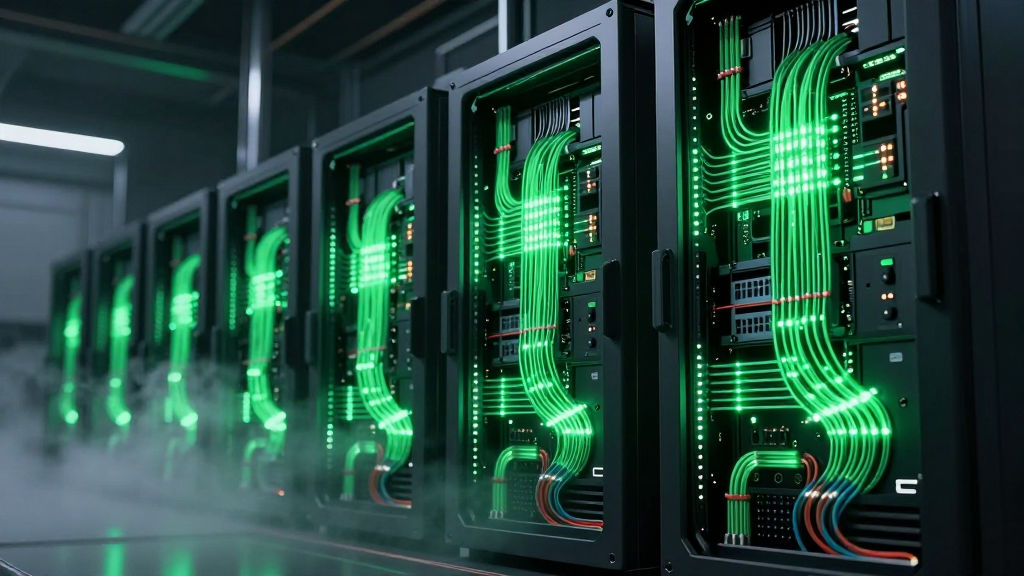
For enterprises looking to deploy at scale, the Vera Rubin NVL72 is the definitive reference design. This liquid-cooled rack-scale system integrates 72 Rubin GPUs and 36 Vera CPUs into a single unit. Because it uses a cable-free design for the internal trays, it is significantly easier to service than older racks.
Maintenance speed is a major factor in AI factory efficiency. NVIDIA claims that the modular design of the NVL72 allows for 18x faster servicing. For a large-scale data center, this means less downtime and lower operational costs. Moreover, the integrated liquid cooling helps manage the intense heat generated by high-density compute. This allows companies to pack more power into a smaller physical footprint.
Microsoft Fairwater and the Partner Ecosystem
No hardware platform succeeds without strong software and cloud support. NVIDIA has partnered with industry leaders to ensure the NVIDIA Rubin platform is available globally. One of the most significant collaborations is Microsoft Fairwater AI. Microsoft is building “superfactories” specifically designed to house thousands of Rubin Superchips.
These Azure-based deployments focus on seamless scaling. For instance, Microsoft’s strategic AI datacenter planning enables seamless large-scale NVIDIA Rubin deployments, ensuring that enterprise customers can access this power without managing the hardware themselves. Similarly, the CoreWeave Rubin integration will allow developers to access these chips through a flexible, hybrid cloud model by the second half of 2026. This ecosystem ensures that whether you are a startup or a Fortune 500 company, you can leverage Rubin’s performance.
Transforming Agentic AI and Inference Costs
The ultimate goal of the NVIDIA Rubin platform is to make agentic AI a reality. Agentic AI refers to models that can reason, plan, and execute tasks autonomously. These workloads require “stateful reasoning,” where the AI remembers context over long interactions. The new Inference Context Memory Storage feature directly supports this.
By utilizing the BlueField-4 DPU to manage memory states, the platform keeps the main GPU free for active computation. This results in the 10x lower inference token costs mentioned earlier. When tokens become cheaper, new business models become viable. For example, high-frequency AI assistants can now run 24/7 without exceeding a company’s cloud budget. This shift will likely accelerate the adoption of AI agents across all sectors of the economy.
Conclusion
The NVIDIA Rubin platform is more than just a faster chip. It is a comprehensive reimagining of how we build, secure, and scale artificial intelligence. From the 88-core Vera CPU to the 22 TB/s bandwidth of the HBM4 memory, every detail aims to maximize AI factory efficiency. For leaders at Synthetic Labs, this represents the infrastructure necessary to move from experimental AI to fully automated, private enterprise intelligence.
As we look toward the late 2026 rollout, organizations must begin planning their infrastructure roadmaps. Transitioning to Rubin will require a strategy that balances cloud flexibility with the security of private clusters. By embracing these advancements, companies can finally overcome the bottlenecks of cost and power that have limited AI’s potential.
Subscribe for weekly AI insights to stay ahead of the curve as we track the rollout of the Rubin architecture and its impact on the generative media landscape.
FAQ
- What is the main advantage of the NVIDIA Rubin platform over Blackwell?
- The Rubin platform offers up to 10x lower inference token costs and requires 4x fewer GPUs to train large Mixture of Experts (MoE) models. It also introduces the Vera CPU and HBM4 memory for significantly higher bandwidth and efficiency.
- What is the Vera Rubin NVL72?
- The NVL72 is a rack-scale system that connects 72 Rubin GPUs and 36 Vera CPUs using liquid cooling and a cable-free design. It is designed to act as a single massive AI supercomputer for data centers.
- How does the BlueField-4 DPU improve AI security?
- The BlueField-4 DPU handles networking and security offloading. It enables 3rd-gen Confidential Computing on the Rubin platform, allowing enterprises to process sensitive data in a secure, isolated hardware environment.
- When will the NVIDIA Rubin platform be available?
- According to the latest roadmaps from partners like CoreWeave and Microsoft, the Rubin platform is expected to begin production and wide deployment in the second half of 2026.
Sources
- NVIDIA Touts Rubin Platform Production Hardware Advances
- Inside the NVIDIA Rubin Platform: Six New Chips, One AI Supercomputer
- Microsoft’s Strategic AI Datacenter Planning Enables Seamless Large-Scale NVIDIA Rubin Deployments
- NVIDIA Rubin Platform AI Supercomputer Official News
- NVIDIA DGX SuperPOD: Scaling AI with Rubin
- At CES, NVIDIA Rubin and AMD Helios Made Memory the Future of AI
- NVIDIA Rubin Platform Deep Dive