
Microsoft Fairwater Superfactories: The Million-GPU Era
Estimated reading time: 5 minutes
- Introduction to NVIDIA’s Rubin Platform and the shift toward extreme-codesigned AI supercomputing.
- How the Microsoft Fairwater superfactories utilize six-chip systems to redefine enterprise intelligence.
- Technical breakdown of the Vera CPU, Rubin GPU, and HBM4 memory architecture.
- Operational benefits including 10x reduction in inference token costs and improved training efficiency.
- The role of advanced networking and fault tolerance in million-GPU cluster management.
- The Architecture of the NVIDIA Rubin Platform
- Microsoft Fairwater Superfactories and Azure Scale
- Achieving Massive Inference Token Cost Reduction
- Networking the Future with NVLink 6 and Spectrum-X
- BlueField-4 and Secure Agentic AI
- Vera CPU: Orchestrating the AI Factory
- Managing Fault Tolerance with the 2nd-Gen RAS Engine
- The Shift Toward Rack-Scale Autonomy
- Impact on Generative Media and Real-Time Reasoning
- Conclusion
- Frequently Asked Questions
- Sources
The landscape of artificial intelligence changed forever at CES 2026. NVIDIA recently unveiled its groundbreaking Rubin Platform, marking a shift toward extreme-codesigned AI supercomputing. This architecture does not just offer more power; it provides the blueprint for the next generation of massive-scale deployments. Specifically, the collaboration surrounding Microsoft Fairwater superfactories demonstrates how these six-chip systems will redefine the limits of enterprise intelligence.
The NVIDIA Rubin Platform arrives at a critical moment for the industry. Companies are moving away from simple chatbots toward complex, agentic AI systems that require immense reasoning capabilities. Consequently, the demand for infrastructure that can handle millions of synchronized GPUs has skyrocketed. This article explores how the Rubin architecture facilitates this scale and what it means for the future of private and public AI infrastructure.
The Architecture of the NVIDIA Rubin Platform
NVIDIA designed the Rubin Platform as a holistic AI factory rather than a collection of individual components. At its core, the platform utilizes six synchronized chips that work in perfect harmony. These include the Vera CPU, the Rubin GPU, NVLink 6 Switches, ConnectX-9 SuperNICs, BlueField-4 DPUs, and Spectrum-6 Ethernet Switches. This tight integration allows for unprecedented data orchestration across massive clusters.
The Vera CPU features 88 Olympus Arm-compatible cores. These cores handle the complex data movement required for modern AI factories. Furthermore, the Rubin GPU introduces 6th-gen Tensor Cores and utilizes NVFP4 precision. This advance allows the GPU to sustain long-context inference while maintaining high efficiency. Because the system uses HBM4 memory, it achieves an incredible 22 TB/s of bandwidth, ensuring that data bottlenecks become a thing of the past.
Microsoft Fairwater Superfactories and Azure Scale
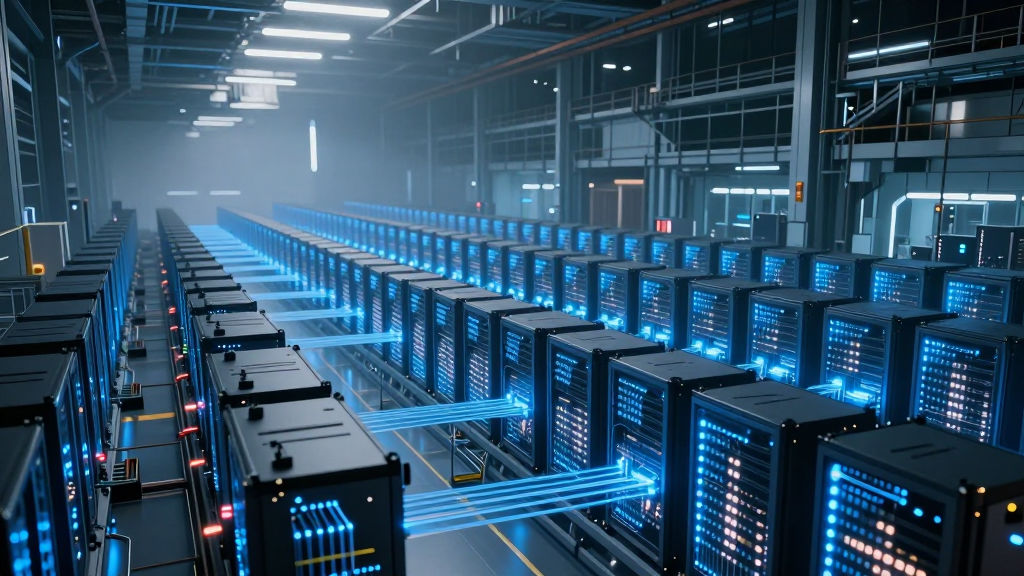
The most ambitious application of this technology involves the Microsoft Fairwater superfactories. Microsoft is currently planning seamless, large-scale deployments that will eventually house hundreds of thousands of Rubin Superchips. These facilities represent the pinnacle of datacenter engineering. By focusing on rack-scale solutions like the Vera Rubin NVL72, Microsoft can scale compute power at a rate previously thought impossible.
Strategic planning for these datacenters is essential for success. Microsoft’s approach enables them to integrate the NVIDIA Rubin Platform into their existing Azure infrastructure without massive service disruptions. You can learn more about how Microsoft’s strategic AI datacenter planning enables seamless large-scale NVIDIA Rubin deployments to maintain global competitiveness. This transition is vital for supporting the next generation of reasoning models and autonomous agents.
Achieving Massive Inference Token Cost Reduction
One of the most significant business benefits of the Rubin architecture is the dramatic reduction in operational costs. NVIDIA estimates a 10x reduction in inference token costs compared to the previous Blackwell generation. For enterprises running massive customer-facing models, this shift changes the fundamental ROI of AI. Lower costs mean that businesses can deploy more sophisticated models to a larger user base.
Additionally, the platform requires 4x fewer GPUs to train Mixture-of-Experts (MoE) models. This efficiency stems from the specialized hardware acceleration for transformer-era workloads. By reducing the physical footprint required for training, companies can achieve faster iteration cycles. This improvement is particularly important for organizations developing small reasoning AI models that require high-precision tuning in private environments.
Networking the Future with NVLink 6 and Spectrum-X
Scalability in a million-GPU environment depends entirely on networking. The NVIDIA Rubin Platform introduces NVLink 6, which provides 3.6 TB/s of GPU-to-GPU bandwidth. This massive throughput allows thousands of GPUs to act as a single, cohesive unit. Without this level of interconnectivity, large-scale training would suffer from significant latency issues.
For scale-out networking, the Spectrum-6 Ethernet Switch plays a pivotal role. It offers 102.4 Tb/s of capacity and utilizes co-packaged optics, known as Spectrum-X Ethernet Photonics. This technology provides 5x better power efficiency when handling the bursty traffic common in AI workloads. As a result, datacenters can maintain high performance without exceeding their power budgets. This efficiency is a core requirement for any modern private AI infrastructure aiming for sustainability.
BlueField-4 and Secure Agentic AI
The role of the Data Processing Unit (DPU) has expanded significantly with the Rubin launch. The BlueField-4 DPU features a dual-die design with a 64-core Grace CPU. It integrates ConnectX-9 networking to provide low-latency communication. More importantly, it introduces Inference Context Memory Storage. This feature allows for key-value (KV) cache sharing, which is essential for fast, responsive agentic AI.
Security is also a top priority for the BlueField-4. It uses ASTRA for secure multi-tenant isolation. This ensures that different users or departments can share the same physical hardware without risking data leaks. For enterprises concerned about privacy, this level of hardware-enforced isolation is a game-changer. It allows for the safe deployment of autonomous agents that handle sensitive corporate data.
Vera CPU: Orchestrating the AI Factory
The Vera CPU serves as the conductor for the entire Rubin ensemble. Its 88 Olympus cores are optimized for the high-intensity data orchestration required by AI factories. Unlike traditional CPUs, Vera is designed specifically to feed the Rubin GPUs at maximum speed. This specialized design prevents the “starvation” of compute resources that often plagues less integrated systems.
Furthermore, the Vera CPU supports the software-defined nature of the Rubin Platform. It works in tandem with the Transformer Engine and cuDNN libraries to maximize peak efficiency. This software-hardware codesign ensures that developers can extract the maximum performance from the hardware with minimal effort. Consequently, the time-to-value for new AI projects is significantly reduced.
Managing Fault Tolerance with the 2nd-Gen RAS Engine
Operating a million-GPU cluster presents unique challenges in terms of reliability. Even a small failure rate can bring down a massive training job. To combat this, the Rubin Platform includes a 2nd-gen RAS (Reliability, Availability, and Serviceability) Engine. This system provides advanced fault tolerance and enables 18x faster servicing compared to older architectures.
The RAS Engine can identify potential hardware failures before they occur. It then automatically reroutes workloads to healthy components. This proactive management minimizes downtime and ensures that long-running training tasks can complete without interruption. For cloud providers and enterprises alike, this reliability is essential for maintaining service-level agreements (SLAs) in production environments.
The Shift Toward Rack-Scale Autonomy
NVIDIA is moving away from selling individual chips toward delivering entire racks. The Vera Rubin NVL72 is a perfect example of this shift. This rack-scale solution provides a pre-configured, liquid-cooled environment that is ready for immediate deployment. It simplifies the complexity of building an AI datacenter by providing a standardized unit of compute.
This modular approach allows companies to scale their infrastructure incrementally. As demand grows, they can simply add more NVL72 racks to their cluster. Because the networking and power management are built into the rack, the integration process is much smoother. This plug-and-play capability is exactly what large-scale operators like Microsoft require to build their Fairwater superfactories.
Impact on Generative Media and Real-Time Reasoning
The Rubin Platform’s high bandwidth and low-precision Tensor Cores are ideal for generative media. Models that produce high-resolution video or complex 3D environments require massive amounts of memory and compute. The 288 GB of HBM4 memory on the Rubin GPU provides the necessary headroom for these demanding tasks. This allows for the creation of more realistic and immersive digital content.
Moreover, the platform excels at real-time reasoning. Agentic AI systems must process information and make decisions in milliseconds. The combination of the BlueField-4 DPU and the high-speed NVLink 6 interconnect ensures that latency is kept to an absolute minimum. This capability will enable a new class of AI applications, from autonomous vehicles to real-time financial trading systems.
Conclusion
The NVIDIA Rubin Platform represents the future of industrial-scale computing. By integrating six specialized chips into a single, cohesive architecture, NVIDIA has paved the way for the million-GPU era. The Microsoft Fairwater superfactories serve as a testament to the scale and ambition that this technology enables. With a 10x reduction in inference costs and significantly improved networking efficiency, the barriers to entry for advanced AI are falling.
As we move toward a world of autonomous agents and massive reasoning models, infrastructure remains the foundation of progress. The transition from Blackwell to Rubin ensures that the industry can continue to grow without being limited by hardware constraints. For enterprises, now is the time to evaluate how these advancements will impact their long-term AI strategy and private infrastructure needs.
Subscribe for weekly AI insights to stay ahead of the rapidly changing landscape of automation and infrastructure.
FAQ
- What is the NVIDIA Rubin Platform?
- The Rubin Platform is NVIDIA’s latest AI supercomputing architecture. It features a six-chip codesign including new GPUs, CPUs, and networking components optimized for million-GPU clusters and agentic AI.
- How does Rubin reduce inference costs?
- Rubin achieves a 10x reduction in inference token costs through hardware-software codesign, the use of NVFP4 precision, and significantly higher memory bandwidth from HBM4.
- What is the Microsoft Fairwater superfactory?
- Fairwater refers to Microsoft’s next-generation AI datacenters designed to house hundreds of thousands of NVIDIA Rubin GPUs, enabling unprecedented scale for Azure’s AI services.
- What is the Vera CPU’s role?
- The Vera CPU uses 88 Olympus cores to orchestrate data flow and manage the complex logistics of an AI factory, ensuring the Rubin GPUs always have the data they need to perform.
Sources
- Inside the NVIDIA Rubin Platform
- NVIDIA News: Rubin Platform AI Supercomputer
- Microsoft’s strategic AI datacenter planning enables seamless large-scale NVIDIA Rubin deployments
- NVIDIA Blogs: DGX SuperPOD Rubin
- NVIDIA CES 2026 Special Presentation
- NVIDIA Rubin Platform: The Future of AI
- CRN: NVIDIA Vera Rubin Ecosystem
- NVIDIA Rubin and the Million GPU Era