
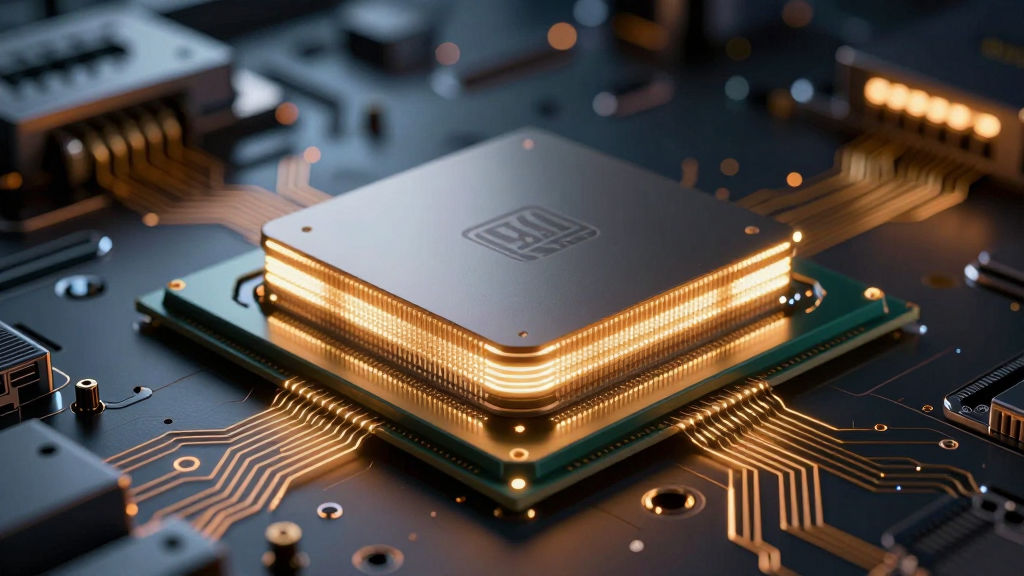
NVIDIA Rubin Platform: Breaking the AI Memory Wall
Estimated reading time: 6 minutes
- Introduction of HBM4 memory delivering a massive 22 TB/s bandwidth to eliminate the “memory wall.”
- The new Vera CPU featuring 88 Armv9.2 cores designed specifically for agentic AI orchestration.
- Revolutionary NVFP4 compute format that slashes inference costs by up to 10x for trillion-parameter models.
- Integrated “AI Factory” networking via Spectrum-6 Ethernet and ConnectX-9 SuperNIC for million-GPU scaling.
- The Architectural Shift: Beyond the GPU
- HBM4 Memory Bandwidth: Shattering the Bottleneck
- Key Memory Specifications of Rubin
- NVFP4 Compute and the Transformer Engine v3
- The Role of the Vera CPU in Agentic Reasoning
- Networking at Scale: Spectrum-6 and ConnectX-9
- The Impact of ConnectX-9
- Economic Implications: Slashing Token Costs
- Physical AI and the Alpamayo Model Ecosystem
- Transitioning to an Annual Silicon Cadence
- Conclusion
The pace of artificial intelligence development remains relentless. Just as enterprises began integrating Blackwell-class systems, NVIDIA recently unveiled its next massive leap at CES 2026. The NVIDIA Rubin platform represents a fundamental shift in how we build and scale AI supercomputers. It moves beyond simple iterative improvements to address the most significant bottleneck in modern computing: the memory wall.
By introducing a six-chip architecture, NVIDIA aims to redefine the efficiency of trillion-parameter models. This platform promises up to 10x lower inference token costs and utilizes 4x fewer GPUs for training Mixture-of-Experts (MoE) models compared to its predecessors. Consequently, the NVIDIA Rubin platform isn’t just a hardware update; it is the foundation for the next decade of agentic AI.
The Architectural Shift: Beyond the GPU
The Rubin architecture is not a single chip but a comprehensive ecosystem. It includes the Vera CPU, the Rubin GPU, and the NVLink 6 Switch. Additionally, it integrates the ConnectX-9 SuperNIC, the BlueField-4 DPU, and the Spectrum-6 Ethernet Switch. This holistic approach ensures that data moves as quickly between components as it is processed within them.
For years, the industry focused almost exclusively on raw FLOPS (Floating Point Operations Per Second). However, the “memory wall” became a critical issue. Compute power grew much faster than the speed at which data could reach the processor. The Rubin architecture addresses this directly by focusing on massive bandwidth and memory capacity.
The platform uses 3nm dual-die GPUs. This design allows for higher transistor density and better thermal management. As a result, developers can run larger models on fewer physical units. This efficiency is vital for organizations maintaining Private AI Infrastructure where space and power are often at a premium.
HBM4 Memory Bandwidth: Shattering the Bottleneck
At the heart of the Rubin GPU lies HBM4 (High Bandwidth Memory 4). This technology provides a staggering 22 TB/s of memory bandwidth per GPU. To put this in perspective, this is a massive leap over previous generations. Such bandwidth is necessary because trillion-parameter models require constant data shuffling.
Low-latency inference depends on how quickly the weights of a model can be accessed. If the memory is too slow, the GPU sits idle. This idle time increases costs and slows down user experiences. With the NVIDIA Rubin platform, the transition to HBM4 ensures that memory latency no longer throttles performance.
Furthermore, each Rubin GPU features 288GB of HBM4 memory. This allows for massive context windows in multimodal systems. When you are building GPT-5 Agentic AI Automation, having a large, fast memory pool is the difference between a helpful assistant and a slow, error-prone one.
Key Memory Specifications of Rubin
- Memory Type: Next-generation HBM4
- Bandwidth: 22 TB/s per GPU
- Capacity: 288GB per GPU
- Interconnect: NVLink 6 with 3.6 TB/s per GPU
NVFP4 Compute and the Transformer Engine v3
NVIDIA also introduced NVFP4 compute as part of the new Transformer Engine v3. This numerical format allows for 4-bit floating-point precision. This is critical because it doubles the effective throughput for inference without significantly sacrificing accuracy.
The Rubin GPU delivers an incredible 50 petaflops of NVFP4 compute. This power is specifically tuned for the Mixture-of-Experts (MoE) models that dominate the current AI landscape. These models only activate a portion of their parameters for any given task. Therefore, they require hardware that can handle rapid switching and high-speed data routing.
Because the Transformer Engine v3 uses hardware-accelerated adaptive compression, it slashes the operational costs of running these models. For example, enterprises can now achieve the same performance as Blackwell clusters while using 75% fewer GPUs. This reduction in hardware footprint leads to massive savings in both capital and operational expenditure.
The Role of the Vera CPU in Agentic Reasoning
While the GPU handles the heavy math, the Vera CPU manages the logic. The Vera CPU utilizes Armv9.2 Olympus cores to handle complex agent orchestration. In the world of agentic AI, the system must reason, plan, and call external tools. These tasks are often better suited for a high-performance CPU.
The Vera CPU is a specialized processor with 88 cores. It is designed to work in tandem with the Rubin GPUs within the NVL72 rack. Specifically, the Vera CPU handles the “thinking” steps of an AI agent. It manages the flow of data and ensures that the GPU resources are utilized optimally.
Moreover, the Vera CPU includes a RAS (Reliability, Availability, and Serviceability) Engine. This engine provides real-time fault tolerance. In a million-GPU cluster, hardware failures are inevitable. However, the RAS Engine allows for modular servicing that is up to 18x faster than previous designs. This reliability is a key reason why major players like Microsoft Azure and AWS have committed to the platform.
Networking at Scale: Spectrum-6 and ConnectX-9
No matter how fast a single chip is, AI at scale depends on the network. NVIDIA addressed this with the Spectrum-6 Ethernet switch and the ConnectX-9 SuperNIC. These components facilitate the creation of “AI Factories” that can scale to millions of GPUs.
The Spectrum-6 Ethernet switch offers a significant boost in power efficiency. It provides 5x better power efficiency compared to standard Ethernet solutions in large clusters. This is a crucial development because AI Energy Infrastructure Challenges have become the primary hurdle for expanding data centers.
The Impact of ConnectX-9
- High-Speed Throughput: Delivers internet-scale bandwidth.
- Low Latency: Reduces the time it takes for GPUs to communicate across the rack.
- Scalability: Allows for non-NVLink clusters to scale efficiently.
- Security: Features advanced encryption for confidential computing.
According to NVIDIA Rubin Platform AI Supercomputer, the combination of these technologies enables a total rack-scale bandwidth of 260 TB/s. This allows for real-time collaborative inference. In this environment, multiple GPUs work together on a single task as if they were one giant processor.
Economic Implications: Slashing Token Costs
The most compelling argument for the NVIDIA Rubin platform for many executives is the bottom line. Inference is the most expensive part of the AI lifecycle once a model is deployed. By optimizing the architecture for MoE models and high-bandwidth memory, NVIDIA has drastically lowered the cost per token.
A 10x reduction in inference costs changes the math for AI startups. Tasks that were previously too expensive to automate now become viable. For example, long-context multimodal reasoning—where the AI processes hours of video or thousands of documents—becomes affordable at scale.
This cost reduction also facilitates the rise of “sovereign AI.” Countries and large enterprises can now afford to run their own private models rather than relying on centralized API providers. The efficiency of the Vera Rubin NVL72 racks makes it possible to pack immense power into a smaller, more manageable data center footprint.
Physical AI and the Alpamayo Model Ecosystem
NVIDIA isn’t just focusing on text and code. The Rubin platform is the engine behind Alpamayo models, a new family of vision-language-action (VLA) models. These models are designed for Level 4 autonomy and physical AI applications.
Alpamayo enables robots and autonomous vehicles to reason about the physical world. It includes tools for:
- Video generation from static images for training data.
- Multi-camera scenario synthesis for 360-degree awareness.
- Edge-case modeling to simulate rare, dangerous events.
- Closed-loop simulation to test AI behavior in virtual worlds before deployment.
These capabilities require the massive memory bandwidth and compute power that only the Rubin architecture provides. By using Rubin to train and run Alpamayo models, developers can accelerate the deployment of robots that actually understand their environment. This move bridges the gap between digital intelligence and physical action.
Transitioning to an Annual Silicon Cadence
Perhaps the most significant strategic shift is NVIDIA’s move to an annual release cycle. Previously, new architectures arrived every two years. Now, NVIDIA is committed to releasing a new platform every single year.
This “Silicon Dominance” strategy forces the rest of the industry to move faster. It means that the NVIDIA Rubin platform will likely see a successor by 2027. For CTOs, this creates a challenge in planning hardware refresh cycles. However, it also ensures that the performance bottlenecks of today will not exist tomorrow.
The ecosystem supporting Rubin is already massive. Partners like CoreWeave, Google, and Meta have already announced roadmaps to integrate these systems. This wide adoption ensures that the software stack—including CUDA and various AI frameworks—will be optimized for Rubin on day one.
Conclusion
The NVIDIA Rubin platform marks a turning point in AI infrastructure. By solving the memory wall through HBM4 and introducing the Vera CPU for agentic reasoning, NVIDIA has created a balanced, efficient, and incredibly powerful system. It effectively addresses the power, cost, and latency barriers that have hindered the scaling of trillion-parameter models.
Whether you are building autonomous robots with Alpamayo or deploying large-scale agentic workflows, the Rubin architecture provides the necessary headroom. It represents the shift from “AI as a tool” to “AI as a factory,” where intelligence is generated at a scale and cost previously thought impossible. As we look toward the 2026 release, the roadmap for private and enterprise AI has never been clearer.
Subscribe for weekly AI insights to stay ahead of the latest developments in high-performance computing and automation.
- What is the NVIDIA Rubin platform?
- The NVIDIA Rubin platform is a next-generation AI supercomputer architecture featuring the Rubin GPU, Vera CPU, and high-speed networking components like the ConnectX-9 SuperNIC.
- When will NVIDIA Rubin be available?
- According to NVIDIA’s roadmap, Rubin-based systems are expected to begin shipping to partners and customers in the second half of 2026.
- How does HBM4 improve AI performance?
- HBM4 (High Bandwidth Memory 4) provides significantly higher data transfer speeds (up to 22 TB/s). This allows the GPU to access model weights faster, reducing latency and increasing the efficiency of large-scale inference.
- What is the Vera CPU?
- The Vera CPU is an 88-core processor based on the Armv9.2 architecture. It is designed to work alongside the Rubin GPU to manage complex logic, system orchestration, and agentic AI reasoning tasks.
- Why does the Rubin platform use NVFP4?
- NVFP4 is a 4-bit floating-point format that doubles compute throughput for AI inference. This allows models to run much faster and more efficiently than with older, higher-precision formats.
Sources
- NVIDIA Blackwell Successor Rubin Releases in 2026
- The Rubin Revolution: NVIDIA Unveils Vera Rubin Architecture
- NVIDIA Rubin Platform AI Supercomputer
- NVIDIA CES 2026 Special Presentation
- NVIDIA Keynote at CES 2026
- NVIDIA Vera Rubin Hardware Cloud Ecosystem
- NVIDIA Rubin Platform Deep Dive
- NVIDIA HBM4 and Networking Analysis