Vera Rubin NVL72: Building the Next-Gen AI Superfactory
Estimated reading time: 7 minutes
- Infrastructure Revolution: The Vera Rubin NVL72 transitions AI from experimental models to industrial-scale production.
- Unified Architecture: Features 3.6 TB/s of GPU-to-GPU bandwidth, allowing a 72-GPU rack to act as a single logical processor.
- Economic Efficiency: Delivers a 10x reduction in inference token costs and 4x better efficiency for training Mixture of Experts (MoE) models.
- Security at Scale: Utilizes BlueField-4 DPUs and ASTRA architecture to provide secure, multi-tenant isolation in shared AI factories.
- The Architectural Leap of the Vera Rubin NVL72
- Vera and Rubin: A New Kind of Co-Design
- Microsoft Fairwater: The Blueprint for Sovereign AI
- HBM4 Memory Bandwidth: The Battle Between Rubin and Helios
- Spectrum-6 and the Photonics Revolution
- CoreWeave and the Multi-Architecture Cloud
- Securing the AI Factory with BlueField-4 and ASTRA
- From Training to Reasoning: The Economics of Agentic AI
- Open Source Alternatives: The Rise of DeepSeek MHC
- Conclusion
The landscape of artificial intelligence changed forever at CES 2026. NVIDIA officially announced that its Rubin platform has entered full production, signaling a massive shift in how we build and scale intelligence. At the heart of this revolution is the Vera Rubin NVL72, a rack-scale system designed to power the next generation of AI superfactories. This platform does not just offer more power; it redefines the very economics of intelligence by slashing inference costs and boosting training efficiency for the world’s most complex models.
Synthetic Labs has closely monitored these developments because they represent the infrastructure backbone for everything we do. Whether you are interested in generative media or private enterprise automation, the hardware layer is now the primary bottleneck. With the introduction of the Vera Rubin NVL72, that bottleneck is moving. We are transitioning from a world of experimental models to a world of industrial-scale AI production.
The Architectural Leap of the Vera Rubin NVL72
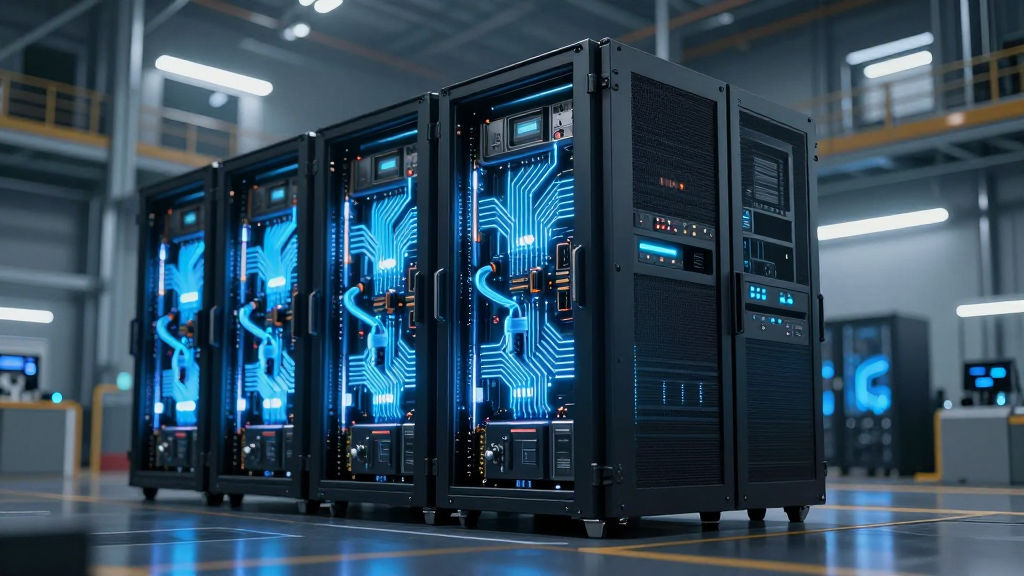
The Vera Rubin NVL72 represents a departure from traditional server design. It utilizes an extreme co-design of six distinct chips to create a unified AI supercomputer. This system integrates the NVIDIA Vera CPU and the Rubin GPU into a cohesive unit that functions as a single, massive processor. By using the NVLink 6 Switch, the system achieves a staggering 3.6 TB/s of GPU-to-GPU bandwidth.
This level of connectivity is essential for modern workloads. As models grow in complexity, the ability to move data between processors becomes more important than the raw speed of the processors themselves. Consequently, the Vera Rubin NVL72 allows developers to treat a full rack of 72 GPUs as one giant logical unit. This capability is crucial for training large-scale Mixture of Experts (MoE) models, which require high-speed communication to function effectively.
Vera and Rubin: A New Kind of Co-Design
The Vera CPU is a specialized powerhouse featuring 88 Olympus Arm-compatible cores. These cores are specifically optimized for AI orchestration, ensuring that the Rubin GPUs never sit idle while waiting for instructions. Meanwhile, the Rubin GPU itself features 224 Streaming Multiprocessors (SMs) equipped with fifth-generation Tensor Cores. These cores support the new NVFP4 and FP8 precision formats, allowing for higher throughput without sacrificing accuracy.
One of the most impressive specs is the HBM4 memory bandwidth. Each Rubin GPU supports up to 288 GB of HBM4 memory, delivering an incredible 22 TB/s of bandwidth. This is a significant jump from previous generations. For enterprises building private AI infrastructure, this means the ability to handle massive datasets with much lower latency. As a result, the economics of running large language models become much more favorable for the average business.
Microsoft Fairwater: The Blueprint for Sovereign AI
Hyperscalers are already racing to deploy this technology. Microsoft recently unveiled its Fairwater superfactories, which are specifically designed to house thousands of Vera Rubin NVL72 racks. These facilities represent the pinnacle of modern data center engineering. By integrating Rubin-level hardware at this scale, Microsoft aims to provide the foundation for what many are calling “Sovereign AI”—the ability for nations and corporations to own their entire intelligence stack.
According to Microsoft Strategic AI Datacenter Planning for Rubin Deployments, the Vera Rubin NVL72 allows for a 4x reduction in the number of GPUs required for MoE training compared to the Blackwell generation. This efficiency is a game-changer for sustainability and operational costs. It allows Microsoft to scale its Azure AI services while simultaneously reducing the energy footprint per token generated. For Synthetic Labs clients, this means that the cloud-based AI tools you use tomorrow will be significantly more capable and responsive than those available today.
HBM4 Memory Bandwidth: The Battle Between Rubin and Helios
NVIDIA is not the only player in the high-stakes game of AI hardware. At CES 2026, AMD introduced the Helios rack, which focuses heavily on memory advancements to compete with the Rubin platform. The industry is currently locked in an intense memory bandwidth arms race. While compute power is important, the real battle is being fought over how quickly data can move from memory to the processor.
The Vera Rubin NVL72 leverages its 22 TB/s HBM4 memory bandwidth to dominate in inference tasks. However, the AMD Helios platform is positioning itself as a strong alternative for specific scientific computing workloads. For strategists, this competition is beneficial. It drives down costs and forces rapid innovation. When choosing a platform for NVIDIA powering industrial AI automation, companies must now weigh the specialized networking of Rubin against the memory-centric approach of competitors like AMD.
Spectrum-6 and the Photonics Revolution
Scaling AI beyond a single rack requires a new approach to networking. Traditional Ethernet often struggles with the bursty, high-bandwidth traffic generated by AI clusters. To solve this, NVIDIA introduced the Spectrum-6 Ethernet Switch. This switch provides 102.4 Tb/s of throughput and utilizes co-packaged optics (photonics) to achieve 5x better power efficiency than previous iterations.
This technology is essential for building million-GPU AI factories. In these massive environments, power consumption is just as much of a constraint as physical space. By using Spectrum-X Ethernet Photonics, operators can scale their infrastructure without causing a localized energy crisis. Furthermore, the Spectrum-6 switch is designed to handle the specific “all-to-all” communication patterns required by the latest AI architectures. This ensures that the network never becomes a bottleneck during intensive training sessions.
CoreWeave and the Multi-Architecture Cloud
CoreWeave is another major player leading the charge in Rubin integration. Their platform is unique because it allows for multi-architecture AI clouds. This means a single enterprise can run Rubin and Blackwell chips side-by-side. By integrating the Vera Rubin NVL72 into their H2 2026 rollout, CoreWeave provides the flexibility that modern innovation teams crave.
This flexibility is vital for companies that cannot afford to “rip and replace” their existing hardware every eighteen months. Using BlueField-4 DPUs, CoreWeave enables key-value cache sharing across different types of chips. This technique significantly boosts the throughput of agentic AI systems. Consequently, developers can build complex workflows that span multiple hardware generations without losing performance.
Securing the AI Factory with BlueField-4 and ASTRA
As AI becomes more integral to business operations, security becomes a non-negotiable requirement. The Vera Rubin NVL72 addresses this through the BlueField-4 DPU and the ASTRA (AI Secure Trust Architecture). The BlueField-4 DPU contains a 64-core Grace CPU and integrated networking capabilities. Its primary job is to offload security and management tasks from the main GPU, ensuring that performance remains dedicated to AI workloads.
ASTRA provides a framework for secure multi-tenant deployments. In a modern AI factory, multiple different models or departments might share the same physical hardware. Without robust isolation, there is a risk of data leakage or unauthorized access. BlueField-4 creates a “trusted zone” that isolates each tenant’s data at the hardware level. This allows for bare-metal performance with the security of a private cloud.
From Training to Reasoning: The Economics of Agentic AI
The shift toward the Vera Rubin NVL72 also marks a shift in AI behavior. We are moving from simple chat interfaces to agentic reasoning systems. These systems do not just predict the next word; they plan, execute, and verify complex tasks. However, this type of reasoning is computationally expensive. It requires long-context windows and high-throughput inference.
By providing 10x lower inference token costs, the Rubin platform makes agentic AI economically viable for the first time. Businesses can now deploy autonomous agents to handle customer service, code generation, and data analysis at scale. The increased efficiency of the Vera Rubin NVL72 means that these agents can “think” longer and more deeply before providing an answer. This results in higher quality outputs and more reliable automation.
Open Source Alternatives: The Rise of DeepSeek MHC
While NVIDIA dominates the hardware conversation, the software and architectural landscape is also evolving. The DeepSeek MHC (Multi-Head Chip) architecture has emerged as a fascinating open-source alternative to proprietary MoE training methods. While NVIDIA optimizes for its own stack, MHC aims for maximum efficiency on a variety of hardware configurations.
DeepSeek MHC promises to redefine training efficiency by reducing the overhead associated with large-scale model synchronization. For developers who want to avoid vendor lock-in, these open-source innovations are crucial. They provide a roadmap for achieving Rubin-like performance on diverse infrastructure. At Synthetic Labs, we believe the future of AI lies in this intersection of elite hardware like the Vera Rubin NVL72 and highly optimized, open-source architectures.
Conclusion
The arrival of the Vera Rubin NVL72 marks the beginning of the “Superfactory” era. By combining the Vera CPU, Rubin GPU, and Spectrum-6 networking, NVIDIA has created a platform that is ready for the demands of 2026 and beyond. This infrastructure does more than just speed up current models; it enables entirely new categories of agentic AI and autonomous reasoning.
For businesses and innovation teams, the message is clear: the hardware you choose today will define your competitive advantage tomorrow. Whether you are leveraging Microsoft Fairwater through the cloud or building your own private infrastructure with CoreWeave, the Vera Rubin NVL72 is the gold standard for performance, security, and economics. As we move deeper into this decade, the ability to scale intelligence efficiently will be the primary driver of global economic growth.
Subscribe for weekly AI insights to stay ahead of the hardware curve and discover how Synthetic Labs can help you navigate the future of automation.
FAQ
- What is the primary benefit of the Vera Rubin NVL72?
- The Vera Rubin NVL72 offers a 10x reduction in inference token costs and 4x better efficiency for training Mixture of Experts (MoE) models compared to previous generations. It functions as a single, unified AI supercomputer within a rack.
- How does HBM4 memory bandwidth impact AI performance?
- HBM4 memory bandwidth determines how quickly data moves from storage to the processor. With 22 TB/s of bandwidth, the Rubin GPU can process massive datasets and long-context reasoning tasks with significantly lower latency.
- What is the role of the BlueField-4 DPU in the Rubin platform?
- The BlueField-4 DPU handles networking, security, and management tasks. It enables the ASTRA architecture, which ensures secure, multi-tenant isolation in shared AI environments without sacrificing hardware performance.
- How does Spectrum-6 Ethernet Photonics improve data centers?
- Spectrum-6 uses co-packaged optics to provide 102.4 Tb/s of throughput with 5x better power efficiency. This allows AI factories to scale to millions of GPUs while managing the intense energy demands of modern workloads.
- Is the Vera Rubin NVL72 compatible with x86 servers?
- Yes, while the NVL72 is an integrated rack, NVIDIA also offers the HGX Rubin NVL8. This is an 8-GPU board designed for x86-compatible servers, allowing enterprises to integrate Rubin performance into existing data center workflows.
Sources
- Inside the NVIDIA Rubin Platform: Six New Chips, One AI Supercomputer
- Microsoft Strategic AI Datacenter Planning for Rubin Deployments
- NVIDIA Rubin Platform AI Supercomputer News
- At CES: NVIDIA Rubin and AMD Helios Memory Race
- NVIDIA Touts Rubin Platform Production, Hardware Advances
- 2026 CES Special Presentation
- NVIDIA CES 2026 Special Presentation
- CES 2026 AI highlights: NVIDIA Rubin, wild gadgets