
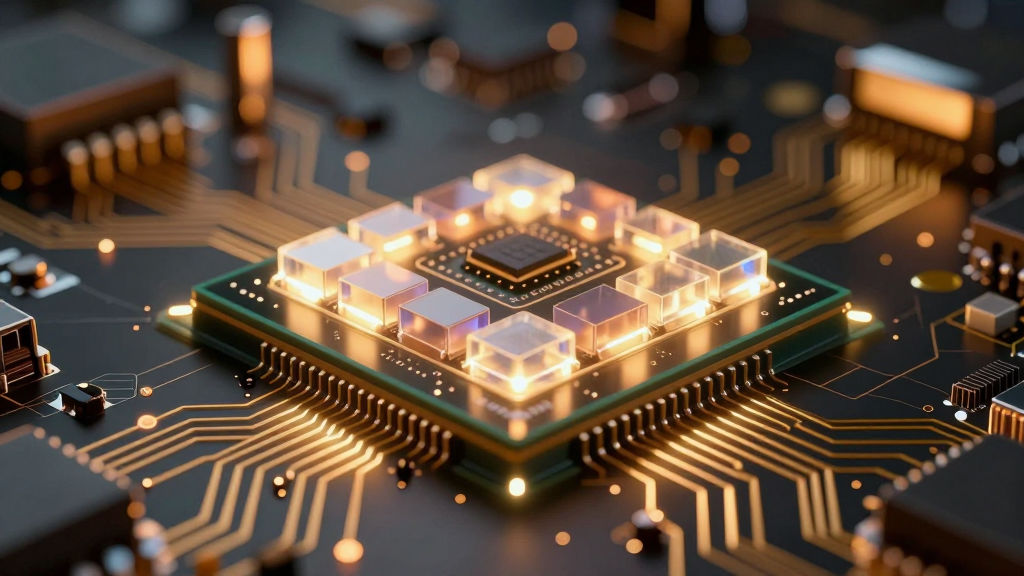
Vera Rubin Samples Ship: Accelerating the 2026 AI Supercycle
Estimated reading time: 7 minutes
- NVIDIA has officially shipped the first Vera Rubin samples to key industry partners, shifting from roadmap to real-world validation.
- The platform targets a 10x reduction in inference token costs and a massive 18x improvement in data center serviceability.
- Next-generation hardware includes the 88-core Vera CPU, Rubin GPU with HBM4 memory, and NVLink 6 networking technology.
- Early validation by partners like Microsoft, Foxconn, and CoreWeave de-risks the full production rollout scheduled for H2 2026.
- The Dawn of the Vera Rubin AI Platform
- Why Vera Rubin Samples Matter for H2 2026
- Breaking Down the NVLink 6 Bandwidth Breakthrough
- Microsoft Fairwater and the Rise of AI Superfactories
- CoreWeave Mission Control and Multi-Architecture Clouds
- Reducing Inference Token Costs by 10x
- RAS Engine and the 18x Serviceability Gain
- Spectrum-X Photonics and the Million-GPU Scale-Out
- BlueField-4 and Inference Context Memory Storage
- Preparing for the H2 2026 Production Cycle
- Conclusion: The Impact of Rubin on the AI Landscape
NVIDIA just reached a massive milestone in the race for artificial intelligence dominance. During the Q4 FY2026 earnings call, the company confirmed it has officially shipped the first Vera Rubin samples to key industry partners. This move signals a shift from theoretical roadmaps to real-world validation for the next generation of computing. Consequently, the industry is preparing for a massive leap in performance and efficiency.
The shipment of these Vera Rubin samples marks the beginning of the “Rubin era.” Select customers like Foxconn, Quanta, and Supermicro are now testing the hardware. This early validation phase ensures that the H2 2026 production rollout remains on schedule. For enterprise leaders, this isn’t just a hardware update. It is the foundation for the next decade of agentic AI and autonomous infrastructure.
The Dawn of the Vera Rubin AI Platform
The NVIDIA Rubin platform represents a total redesign of data center architecture. Unlike previous iterations, Rubin focuses on the “extreme codesign” of six distinct chips. This includes the Vera CPU and the Rubin GPU. Additionally, it integrates the NVLink 6 Switch and the ConnectX-9 SuperNIC. These components work together to form a cohesive AI supercomputer.
Early reports indicate that the Vera CPU features 88 high-performance cores. Meanwhile, the Rubin GPU carries a massive 288 GB of HBM4 memory. This combination allows for unprecedented data throughput. For example, the platform targets a 10x reduction in inference token costs. Therefore, developers can run larger models for a fraction of the current price.
The platform also introduces the BlueField-4 DPU. This chip manages the complex data movement required for gigascale reasoning. As a result, the Rubin platform can handle trillion-parameter models with ease. This development aligns with our previous look at how NVIDIA is powering industrial AI automation through hardware innovation.
Why Vera Rubin Samples Matter for H2 2026
Shipping samples to customers like Wistron and Foxconn is a critical de-risking step. These partners build the physical racks that house the silicon. By receiving Vera Rubin samples now, they can validate power delivery and cooling systems early. This proactive approach prevents bottlenecks during the mass production phase in late 2026.
Furthermore, early sampling allows software developers to optimize their stacks. Companies like Red Hat are already working on Rubin-optimized versions of Enterprise Linux. This ensures that when the hardware arrives, the software is ready. Consequently, enterprises can achieve a faster return on investment.
These samples also provide a “frozen” spec for data center architects. Large-scale cloud providers need to know exact dimensions and thermal loads. Having physical units in hand allows them to finalize their “AI superfactories.” This precision is vital for maintaining the aggressive timelines set by the world’s largest tech firms.
Breaking Down the NVLink 6 Bandwidth Breakthrough
Networking is often the silent killer of AI performance. However, the Rubin platform addresses this with NVLink 6 technology. This sixth-generation fabric offers staggering 3.6 TB/s bandwidth per GPU. Specifically, it creates a 260 TB/s rack-scale fabric that acts like a single massive processor.
This bandwidth is essential for training Mixture-of-Experts (MoE) models. These models require constant communication between different “expert” layers. In the past, network congestion slowed down this process significantly. Now, NVLink 6 reduces congestion by 50% using the Scalable Hierarchical Aggregation Protocol (SHARP).
As a result, architects can train massive models with 4x fewer GPUs than the Blackwell generation. This efficiency gain is a game-changer for private AI infrastructure deployments. It allows organizations to achieve high performance without consuming excessive physical space. Therefore, smaller data centers can now compete with hyperscale facilities.
Microsoft Fairwater and the Rise of AI Superfactories
Microsoft is one of the primary recipients of the early Rubin hardware. Their “Fairwater” project aims to build the world’s most advanced AI superfactories. These facilities will use Vera Rubin NVL72 racks at an incredible scale. We are talking about hundreds of thousands of Superchips working in unison.
The goal of Fairwater is to provide the backbone for agentic AI applications. These apps require high-speed reasoning and massive context windows. By using the Rubin platform, Microsoft can lower the cost of serving these models to millions of users. Moreover, the platform supports rack-scale confidential computing. This feature protects proprietary data even during intensive training runs.
This massive scale-up is a response to the exploding demand for inference. As more companies deploy small reasoning AI models for specific tasks, the infrastructure must keep up. Microsoft’s investment proves that Rubin is the primary engine for this transition. Consequently, the collaboration between NVIDIA and Microsoft will likely define the next three years of cloud computing.
CoreWeave Mission Control and Multi-Architecture Clouds
CoreWeave is also integrating the Rubin platform into its specialized cloud. Their “Mission Control” software allows users to manage diverse AI workloads across different hardware generations. For example, a customer could run training on Rubin while keeping legacy inference on Blackwell. This flexibility is crucial for businesses that cannot afford a full “rip-and-replace” upgrade.
The Rubin platform fits perfectly into this multi-architecture strategy. Because it uses Spectrum-6 Ethernet, it can coexist with existing networking standards. This allows for a smoother transition as companies gradually upgrade their fleets. Furthermore, CoreWeave leverages the platform’s power efficiency to lower operational costs.
According to technical reports, NVIDIA Delivers First Vera Rubin AI GPU Samples to Customers to these key partners for immediate validation. This hardware includes 288GB of HBM4 memory per GPU. Such specs allow CoreWeave to offer higher memory density to its clients. Therefore, startups working on heavy generative media can now access the resources they need more easily.
Reducing Inference Token Costs by 10x
The most significant economic impact of Rubin is the reduction in token costs. NVIDIA claims the platform can lower costs by up to 10x compared to Blackwell. This is achieved through the third-generation Transformer Engine. Specifically, it uses NVFP4 compute to reach 50 petaflops of performance per GPU.
Lower token costs make complex AI interactions viable for mass consumption. Currently, high latency and high cost limit the use of sophisticated reasoning agents. Rubin changes this equation by making inference faster and cheaper. As a result, we will see more “always-on” AI assistants in the enterprise.
Additionally, the use of HBM4 memory provides the bandwidth needed for real-time applications. High-bandwidth memory ensures that data doesn’t get stuck waiting for the processor. This is particularly important for agentic AI that needs to “think” before it speaks. Consequently, the Rubin platform is not just about raw power; it is about economic scalability.
RAS Engine and the 18x Serviceability Gain
In a data center with 100,000 GPUs, hardware failure is a daily occurrence. However, NVIDIA’s new RAS Engine (Reliability, Availability, and Serviceability) tackles this head-on. The second-generation RAS Engine provides real-time health checks for the entire system. It can proactively identify failing components before they crash a training run.
One of the most impressive features is the cable-free tray design. This modular approach allows technicians to swap out components in seconds. In fact, NVIDIA claims an 18x improvement in serviceability compared to previous designs. Therefore, maintenance downtime is virtually eliminated.
For private AI operators, this resiliency is a major selling point. They often lack the massive staff of a hyperscaler to manage constant repairs. By using the RAS Engine and software-defined routing, the system can automatically bypass faulty nodes. This ensures that the AI factory keeps running 24/7 without manual intervention.
Spectrum-X Photonics and the Million-GPU Scale-Out
Scaling to a million GPUs requires more than just better chips. It requires a revolution in how we move light and data. The Rubin platform introduces Spectrum-X Ethernet Photonics for this exact reason. This technology uses light instead of traditional copper for long-distance data transfers.
Photonics provides a 5x improvement in power efficiency for large-scale networking. Since power consumption is the biggest hurdle for AI growth, this is a vital update. It allows companies to build larger clusters without exceeding the limits of the local power grid. Specifically, it enables 1.6 Tb/s speeds across the entire data center fabric.
The Quantum-CX9 InfiniBand and Spectrum-6 Ethernet switches complete this networking suite. These tools ensure that every GPU in a million-chip cluster stays fed with data. Without this, the GPUs would sit idle, wasting millions of dollars in electricity. Consequently, Rubin’s networking stack is just as important as the silicon itself.
BlueField-4 and Inference Context Memory Storage
A major bottleneck in modern AI is “context memory.” When an AI agent performs a complex task, it needs to remember previous steps. Traditionally, this data is stored in slow system memory. However, the Rubin platform uses BlueField-4 for “Inference Context Memory Storage.”
This feature allows for gigascale reasoning by keeping context data closer to the compute. It significantly speeds up tasks that involve long-form documents or multi-step workflows. For example, an AI coder can “remember” an entire repository without re-scanning it every time. This makes the agent feel more intuitive and capable.
Furthermore, this dedicated storage processor offloads tasks from the main GPU. This frees up the Rubin GPU to focus purely on compute. As a result, the entire system operates more efficiently. For enterprise developers, this means more powerful agents with less latency.
Preparing for the H2 2026 Production Cycle
As Vera Rubin samples circulate among partners, the countdown to production has begun. NVIDIA’s annual cadence has moved from every two years to every single year. This rapid release cycle forces the entire ecosystem to move faster. Competitors are now struggling to match this pace of innovation.
Jensen Huang, NVIDIA’s CEO, highlighted this during the earnings call. He noted that the demand for inference is driving a new industrial revolution. Every company is now looking to become an “AI factory.” Rubin is the turnkey solution for this transformation. It provides the compute, the network, and the reliability required for the future.
The “AI supercycle” is no longer just a buzzword. It is backed by billions of dollars in hardware orders. Early sampling results suggest that the performance targets are being met or exceeded. Therefore, the transition from Blackwell to Rubin will likely be the fastest in NVIDIA’s history.
Conclusion: The Impact of Rubin on the AI Landscape
The shipment of Vera Rubin samples is a defining moment for 2026. It proves that the “Rubin platform” is not just a concept, but a tangible reality. With its 88-core Vera CPU and HBM4-equipped GPUs, NVIDIA is setting a new standard for performance. The 10x reduction in token costs will democratize advanced AI for enterprises of all sizes.
Moreover, the integration of technologies like NVLink 6 and BlueField-4 ensures that the system scales effectively. Whether it is through Microsoft’s massive superfactories or CoreWeave’s flexible clouds, Rubin will be everywhere. The focus on 18x better serviceability through the RAS Engine also makes it a practical choice for private infrastructure.
As we move toward the H2 2026 production launch, the industry will continue to evolve. Organizations must begin planning their infrastructure strategy now to stay competitive. The era of agentic AI is here, and it is powered by Rubin.
Subscribe for weekly AI insights from Synthetic Labs.
FAQ
- What are the key specs of the Vera Rubin platform?
- The platform features the Vera CPU with 88 cores and the Rubin GPU with 288 GB of HBM4 memory. It also includes NVLink 6 for 3.6 TB/s bandwidth and the BlueField-4 DPU for advanced data management.
- Why is the 10x reduction in inference cost important?
- Lowering token costs allows companies to deploy more complex AI agents without breaking the budget. It makes high-level reasoning and generative media more affordable for consumer and enterprise apps.
- When will Vera Rubin hardware be available for mass purchase?
- While Vera Rubin samples are currently with partners for validation, mass production and general availability are expected in the second half of 2026.
- How does Rubin improve data center maintenance?
- The platform uses a second-generation RAS Engine and cable-free trays. These innovations lead to an 18x improvement in serviceability, allowing for faster repairs and higher uptime.
- What is the role of BlueField-4 in the Rubin architecture?
- BlueField-4 acts as a storage processor for “Inference Context Memory.” This allows the system to store and access massive amounts of reasoning data quickly, enabling more advanced AI agents.
Sources
- NVIDIA Vera Rubin AI computing system launch
- Rubin Platform AI Supercomputer
- NVIDIA Delivers First Vera Rubin AI GPU Samples to Customers
- NVIDIA Rubin Platform Overview
- NVIDIA Rubin Architecture Presentation
- NVIDIA Announces Financial Results for Fourth Quarter and Fiscal 2026
- NVIDIA’s Vera Rubin Platform Could Ignite Next AI Supercycle