
How Inference Context Memory Storage Redefines AI Agent Infrastructure
Estimated reading time: 6 minutes
- Inference Context Memory Storage solves the KV cache bottleneck, enabling long-context reasoning for autonomous agents.
- The BlueField-4 DPU acts as an AI-native operating system, offloading storage and networking to hit 800 Gb/s speeds.
- NVIDIA ASTRA introduces hardware-level multi-tenant security and unified network control for private AI factories.
- Modular architectures like the Vera Rubin NVL72 allow for massive scaling while improving power efficiency by up to 5x.
- The Bottleneck in Modern AI Reasoning
- Introducing the BlueField-4 DPU and AI-Native Storage
- How Inference Context Memory Storage Works
- ASTRA: The Security Layer for Multi-Tenant AI
- The Role of Vera Rubin NVL72 in Gigascale Factories
- Reinventing Storage with Ecosystem Partners
- Efficiency Gains and Operational Excellence
- The Transition to Physical-World AI Agents
- Why Unified Network Control Matters
- Future-Proofing Your AI Strategy
- Conclusion
- FAQ
- Sources
The shift from simple chatbots to autonomous AI agents requires a massive leap in data management. Traditional storage systems often struggle to keep up with the demands of long-context reasoning and multi-turn conversations. To solve this, the new Inference Context Memory Storage platform is emerging as a critical foundation for the next generation of gigascale AI factories.
This technology represents a fundamental change in how data centers handle intelligence. By integrating high-speed networking with specialized memory management, organizations can finally deploy agents that remember past interactions without massive latency. Consequently, the architecture of private AI infrastructure is evolving to prioritize “context” as a first-class citizen in the hardware stack.
The Bottleneck in Modern AI Reasoning
Large Language Models (LLMs) do not just process text; they generate a massive amount of intermediate data. This data, known as the Key-Value (KV) cache, allows the model to “remember” the beginning of a sentence while it generates the end. However, as context windows grow to millions of tokens, this cache becomes too large for traditional GPU memory alone.
Current data centers often dump this information or move it to slow storage tiers. As a result, AI agents lose their “train of thought” or suffer from extreme delays during complex tasks. This performance hit limits the effectiveness of agentic AI automation in enterprise environments. To move forward, we need a way to store and retrieve context at the speed of the processor itself.
Introducing the BlueField-4 DPU and AI-Native Storage
At CES 2026, the unveiling of the BlueField-4 DPU marked a turning point for data center efficiency. This Data Processing Unit (DPU) acts as the “operating system” for the modern AI factory. Specifically, it offloads networking, security, and storage tasks from the primary GPU and CPU.
The BlueField-4 DPU features a 64-core Grace CPU and massive LPDDR5X bandwidth. These specs allow it to handle 800 Gb/s networking speeds with ease. By using this chip, providers can build AI-native storage that bypasses the traditional bottlenecks of legacy Linux kernels. This specialized hardware ensures that data flows directly to where the AI needs it most.
How Inference Context Memory Storage Works
The Inference Context Memory Storage platform optimizes the way AI models access their “working memory.” Instead of reloading the entire context for every query, the system stores the KV cache in a persistent, high-speed layer. This allows multiple AI agents to share the same context across a massive server rack.
Furthermore, this platform enables “long-horizon” agents. These are systems capable of managing projects over days or weeks rather than just seconds. By accelerating KV cache acceleration, the system reduces the time to first token (TTFT) significantly. This capability is essential for businesses building private AI infrastructure that must remain both fast and secure.
ASTRA: The Security Layer for Multi-Tenant AI
As AI factories scale, security becomes a primary concern for CTOs and engineers. The NVIDIA ASTRA (Advanced Secure Trusted Resource Architecture) provides a framework for multi-tenant AI security. It ensures that different departments or clients can share the same physical hardware without risking data leaks.
ASTRA works by isolating “trust domains” directly at the hardware level. For example, the DPU can encrypt data in transit using AES-GCM without slowing down the network. Because the security policies live on the DPU, even a compromised host OS cannot access the private keys of another tenant. This zero-trust approach is vital for companies moving away from public clouds to maintain strict data sovereignty.
The Role of Vera Rubin NVL72 in Gigascale Factories
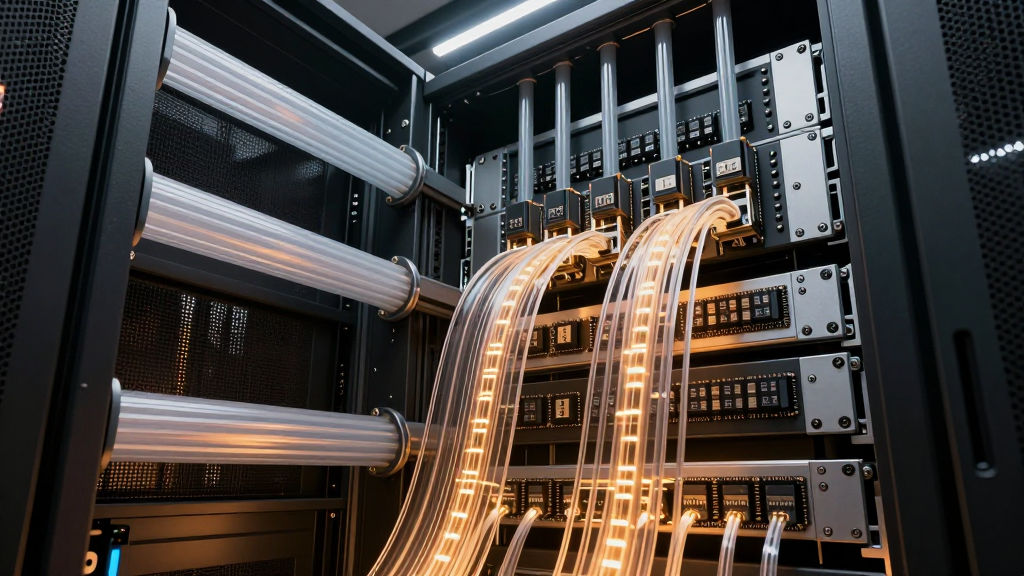
Scaling to trillion-parameter models requires more than just a few servers. The Vera Rubin NVL72 platform provides a modular rack architecture that acts as a single, giant GPU. This system uses liquid cooling and high-density interconnects to maximize power efficiency.
Within this rack, the ConnectX-9 SuperNIC works alongside the BlueField-4 to provide 1.6 Tb/s of aggregate bandwidth per GPU. This massive throughput is necessary to support the real-time demands of physical-world AI. Whether an agent is controlling a robot or analyzing a global supply chain, the NVL72 provides the raw horsepower to sustain those workflows.
Reinventing Storage with Ecosystem Partners
NVIDIA is not building this new storage category alone. Leading infrastructure companies like Dell Technologies, HPE, IBM, and Pure Storage are integrating Inference Context Memory Storage into their enterprise products. These partnerships ensure that businesses can buy “AI-ready” storage arrays that plug directly into their existing data centers.
For instance, companies like WEKA are utilizing these DPUs to provide S3-over-RDMA. This allows for incredibly fast data ingestion from object storage directly to the GPU. Consequently, the time required to train or fine-tune models drops from weeks to days. These improvements make it easier for teams to experiment with small reasoning AI models tailored for specific industrial tasks.
Efficiency Gains and Operational Excellence
Energy consumption remains a massive hurdle for the AI industry. However, the BlueField-4 DPU architecture offers up to 5x better power efficiency compared to previous generations. By offloading infrastructure tasks to specialized silicon, the main GPUs can focus entirely on computation.
In addition, the modular nature of the Vera Rubin platform reduces deployment time by up to 18x. Instead of configuring hundreds of individual cables, engineers can deploy pre-integrated racks that are “AI-ready” out of the box. This speed of deployment allows companies to react faster to market shifts and new model releases.
The Transition to Physical-World AI Agents
We are moving past the era of digital-only assistants. The goal of modern infrastructure is to support agents that interact with the physical world. These “intelligent collaborators” require grounded reasoning and real-time sensor processing.
Because Inference Context Memory Storage provides persistent memory, these agents can learn from their environment over time. They don’t just “forget” the state of a factory floor once the power cycles. Instead, they maintain a continuous world model. This continuity is the key to achieving truly autonomous operations in manufacturing, logistics, and healthcare.
Why Unified Network Control Matters
Historically, data center networks were split between North-South traffic (outside the data center) and East-West traffic (between servers). NVIDIA ASTRA unifies these two flows into a single control plane. This unification allows for much more granular policy enforcement across the entire AI cluster.
For example, an administrator can set a policy that limits how much bandwidth a specific training job can consume. Because the BlueField-4 DPU enforces this at the hardware edge, it prevents “noisy neighbor” problems. This ensures that a large training run doesn’t starve a mission-critical inference agent of the resources it needs to function.
Future-Proofing Your AI Strategy
The landscape of AI hardware is changing faster than most software cycles. Therefore, building on a flexible, DPU-centric architecture is a strategic necessity. The BlueField-4 DPU provides a programmable path forward that can adapt to new algorithms and security threats.
By investing in AI-native storage, companies protect themselves against the high costs of data movement. As models become more “agentic,” the ability to handle massive context windows will become the primary differentiator between successful AI implementations and failed ones. Organizations should begin auditing their current storage throughput to prepare for the H2 2026 arrival of these new platforms.
Conclusion
The introduction of Inference Context Memory Storage and the BlueField-4 DPU marks a new era in computing. We are moving away from general-purpose servers and toward specialized, gigascale AI factories. These systems are designed specifically to handle the unique memory and networking demands of autonomous agents.
By leveraging NVIDIA ASTRA for security and ConnectX-9 SuperNIC for speed, enterprises can finally build private infrastructures that rival the performance of the world’s largest clouds. This shift empowers every organization to own their intelligence while maintaining the highest levels of security and efficiency.
Subscribe for weekly AI insights to stay ahead of the latest infrastructure trends.
FAQ
- What is Inference Context Memory Storage?
- It is a specialized storage platform designed to store and retrieve the KV cache of AI models. It enables long-context reasoning and faster multi-turn conversations by keeping “working memory” closer to the processing units.
- How does the BlueField-4 DPU improve AI performance?
- The DPU offloads networking, security, and storage tasks from the GPU. This frees up the GPU’s resources for actual AI computation, while the DPU handles data movement at speeds up to 800 Gb/s.
- What is NVIDIA ASTRA?
- ASTRA stands for Advanced Secure Trusted Resource Architecture. It is a security framework that enables multi-tenant isolation in AI clusters, ensuring that different users can share hardware securely using a zero-trust model.
- Why is the KV cache important for AI agents?
- The KV cache stores the mathematical representations of previous parts of a conversation. Without an efficient way to store this cache, AI models would have to re-process the entire conversation every time they generate a new word, causing massive delays.
Sources
- NVIDIA BlueField-4 Powers New Class of AI-Native Storage
- Redefining Secure AI Infrastructure with ASTRA
- NVIDIA DPU Products and Architecture
- NVIDIA’s Star Attraction at CES 2026
- NVIDIA BlueField-4 DPU
- 2026 NVIDIA 6 Chips for the Next
- NVIDIA’s BlueField ASTRA Brings Unified Network Control to AI Clusters