Designing Secure Air-Gapped Private AI Infrastructure
Estimated reading time: 6 minutes
- Air-gapped AI infrastructure offers the highest level of data sovereignty for highly regulated industries.
- Building these systems requires a self-contained stack of high-density GPUs, local inference servers, and private vector databases.
- Implementing an Enterprise RAG architecture is essential for providing accurate, context-aware AI without internet connectivity.
- Official private AI channels are the most effective way for organizations to mitigate the risks of “Shadow AI.”
- The Drive Toward Private AI Infrastructure
- Understanding the Air-Gapped Architecture
- Building Air-Gapped AI Assistants
- Implementing Enterprise RAG Architecture
- Managing AI Governance and Shadow IT
- Hardware Selection for Private Clusters
- Training vs. Inference in a Private Cloud
- Technical Hurdles of Local Deployments
- Scaling Your Private AI Infrastructure
- The Future of Sovereign Intelligence
- Conclusion
- Sources
Modern enterprises face a difficult choice between innovation and absolute data security. While public AI models offer incredible power, they often require sending sensitive data to external servers. Consequently, many organizations are now turning toward private AI infrastructure to maintain total control. This shift represents a move toward sovereign intelligence where the data never leaves the corporate perimeter.
Building a truly secure environment requires more than just local hardware. It involves a strategic blend of hardware, software, and rigorous security protocols. This article explores how to design air-gapped AI systems that empower your workforce while protecting your intellectual property. By the end, you will understand the architecture needed for a production-ready, private AI ecosystem.
The Drive Toward Private AI Infrastructure
The rapid adoption of large language models has created a new security frontier. For many regulated industries, the standard API-based approach is simply not an option. Healthcare, defense, and financial services require a higher level of isolation. Therefore, the demand for private AI infrastructure has surged as companies seek to avoid the risks associated with multi-tenant cloud environments.
Privacy is not the only motivator for this transition. Performance and cost also play significant roles in the decision-making process. Public APIs often suffer from latency issues and unpredictable rate limits. In contrast, local infrastructure allows for dedicated throughput and customized optimization. When you own the hardware, you control the priority of every inference request.
Furthermore, data residency requirements are becoming stricter globally. Many jurisdictions mandate that specific data types remain within national borders. A private setup ensures compliance without sacrificing the benefits of modern generative tools. This foundation allows teams to experiment freely without fear of a data leak or a compliance violation.
Understanding the Air-Gapped Architecture
A truly air-gapped system has no physical or wireless connection to the public internet. While this may sound extreme, it is the gold standard for high-stakes security. In an AI context, this means the model, the vector database, and the user interface all live on an isolated internal network. Consequently, your most valuable trade secrets remain invisible to the outside world.
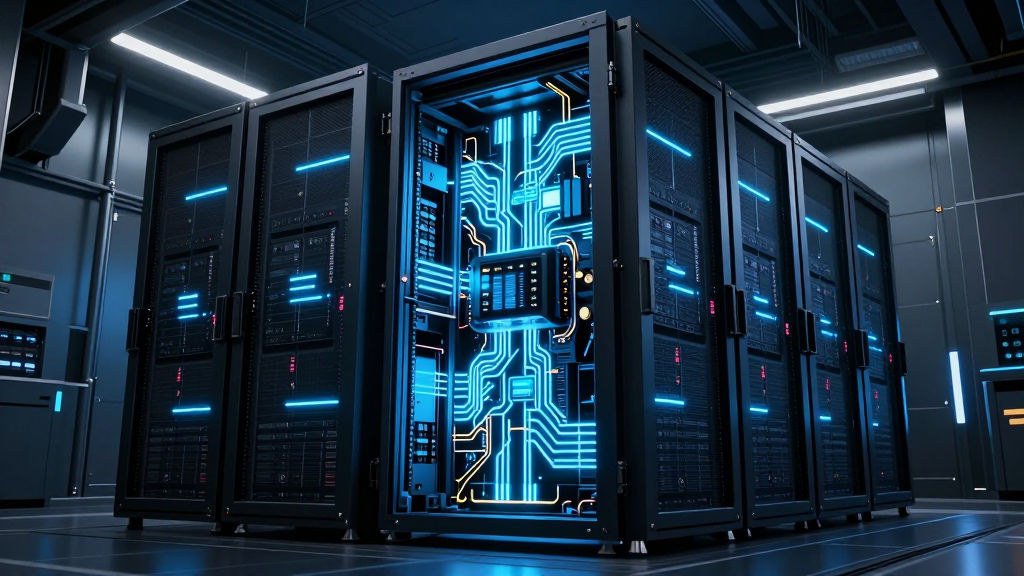
Implementing this requires a robust hardware stack. Organizations typically deploy high-density GPU clusters within their own data centers or secure colocation facilities. These clusters must handle intensive compute tasks while maintaining low power-to-performance ratios. Transitioning to this model is a significant step beyond standard cloud usage, as we discussed in our guide on building private AI infrastructure.
The software layer is equally important in an isolated environment. You cannot rely on “phone-home” licensing or cloud-based weight hosting. Instead, engineers must manually port model weights, such as Llama 3 or Mistral, into the secure zone via physical media or verified secure gateways. This process ensures that every piece of code and every model parameter is audited before it enters the ecosystem.
Building Air-Gapped AI Assistants
Air-gapped assistants provide the same utility as public chatbots but with a crucial difference. They process internal documents, proprietary code, and sensitive emails without external exposure. To build these, developers use a “local-first” approach. This involves running inference servers like vLLM or Text Generation Inference (TGI) on internal nodes.
The user interface must also be hosted locally. Many teams deploy customized versions of open-source chat interfaces to ensure a familiar experience. Because these tools run on the internal network, they can integrate directly with other secure systems like Jira or internal wikis. This deep integration increases the value of the assistant significantly.
However, an assistant is only as good as the information it can access. Without the internet, the model relies entirely on your internal knowledge base. This is where a sophisticated data pipeline becomes necessary. You must curate and clean your data before it reaches the model to ensure high-quality responses and avoid “garbage in, garbage out” scenarios.
Implementing Enterprise RAG Architecture
Retrieval-Augmented Generation, or RAG, is the backbone of modern enterprise AI. It allows a model to look up specific information from your private documents before generating a response. In an air-gapped setting, your enterprise RAG architecture must be entirely self-contained. This includes the embedding models, the vector database, and the document ingestion engine.
First, you need an embedding model to convert text into numerical vectors. Small, efficient models like those from the BERT family often work best for this. Once the data is embedded, it resides in a local vector database such as Milvus, Qdrant, or Weaviate. These databases allow for high-speed similarity searches without ever contacting a third-party service.
The RAG pipeline works by identifying the most relevant document chunks based on a user’s query. The system then feeds these chunks into the LLM as context. As a result, the model provides accurate, factual answers based on your specific business data. This architecture effectively eliminates the “hallucination” problem that plagues many general-purpose models.
Managing AI Governance and Shadow IT
When official AI tools are too restrictive, employees often turn to unsanctioned public alternatives. This phenomenon is known as shadow AI, and it poses a massive risk to corporate security. By providing a robust, high-performance private alternative, IT departments can effectively neutralize this threat. Users will naturally gravitate toward the most convenient and powerful tool available.
Effective AI governance involves more than just providing a tool; it requires active monitoring. Administrators must track how models are used and what data is being queried. Even in an air-gapped environment, internal threats and data misuse are possible. Consequently, implementing detailed audit logs and access controls is a non-negotiable requirement.
We have previously explored the shadow AI risks that emerge when companies fail to provide official channels for innovation. A private AI platform serves as the ultimate “carrot” for employees. It offers them the power of generative AI while keeping the “stick” of security and compliance firmly in place. This balance is the key to sustainable enterprise adoption.
Hardware Selection for Private Clusters
Choosing the right hardware is a critical decision for any private deployment. While NVIDIA remains the market leader, other options are emerging for specific workloads. You must balance the upfront capital expenditure against the long-term operational costs. High-performance networking, such as InfiniBand or high-speed Ethernet, is also essential to prevent bottlenecks during multi-GPU inference.
Memory bandwidth often matters more than raw compute power for large-scale inference. Specifically, models with large context windows require significant VRAM. If your organization plans to process massive legal documents or long codebases, prioritize GPUs with high memory capacity. This ensures that the system remains responsive even under heavy concurrent usage.
Additionally, cooling and power infrastructure must be upgraded to handle modern AI chips. These components generate significant heat and require specialized data center environments. Some companies are even exploring liquid cooling solutions to maintain optimal performance. Regardless of the choice, the goal is to create a stable environment that can scale as your AI needs grow.
Training vs. Inference in a Private Cloud
Most enterprises do not need to train a model from scratch. Instead, they focus on inference and fine-tuning. Training requires massive datasets and months of compute time, which is rarely cost-effective. However, fine-tuning a pre-trained model on your specific corporate language or specialized domain is highly beneficial.
Fine-tuning allows the model to learn your company’s “voice” and specific terminology. For instance, a medical company might fine-tune a model on its internal research papers to improve accuracy. This process can be done on a relatively small cluster of GPUs. Once fine-tuned, the model is deployed for inference within the private network.
By focusing on inference-optimized setups, you can serve thousands of employees with a modest hardware footprint. This approach maximizes ROI by utilizing the intelligence already baked into open-source models like those from public API providers while keeping the final tuning and execution strictly local. It is the most efficient path to deploying enterprise-grade intelligence.
Technical Hurdles of Local Deployments
Running AI locally is not without its challenges. One of the primary hurdles is the “dependencies” problem. Modern AI stacks rely on a complex web of software libraries that frequently update. In an air-gapped environment, managing these updates is a manual and tedious process. You must mirror entire repositories like PyTorch or Hugging Face to keep your stack current.
Latency is another factor to consider. While cloud providers use highly optimized global networks, your internal network might not be as fast. Poorly configured load balancers or slow internal switches can degrade the user experience. Therefore, network engineering must be a core part of your AI infrastructure strategy.
Finally, there is the issue of model decay. As your company’s data changes, the RAG system and fine-tuned models can become outdated. You need a regular cadence for re-indexing your vector database and potentially re-tuning your models. This requires a dedicated DevOps (or MLOps) team to ensure the system remains a “living” resource rather than a static archive.
Scaling Your Private AI Infrastructure
Growth is inevitable once an AI tool becomes popular within an organization. You must design your system to scale horizontally. This means adding more inference nodes as the user base grows. Modern container orchestration tools like Kubernetes are perfect for managing these distributed workloads.
Using Kubernetes allows you to spin up new instances of a model in seconds. If the HR department suddenly has a high volume of queries, the system can automatically allocate more GPU resources to that specific task. This elasticity is crucial for maintaining a high quality of service across different business units.
Moreover, scaling isn’t just about hardware. It also involves scaling your data pipelines. As you ingest more documents into your enterprise RAG architecture, your vector database must handle larger search indices without slowing down. Choosing scalable databases from the start prevents a painful migration later in the project lifecycle.
The Future of Sovereign Intelligence
The trend toward decentralization in AI is only beginning. As models become smaller and more efficient, we will see even more “local-first” applications. Sovereign AI is about more than just security; it is about autonomy. It ensures that a company’s core intelligence is not dependent on the pricing or availability of a third-party vendor.
In the coming years, we expect to see “AI in a box” solutions that make air-gapped deployments even easier. These pre-configured appliances will come with everything needed to run a secure assistant out of the box. For now, building a custom stack remains the best way to ensure a perfect fit for your specific organizational needs.
Ultimately, private AI infrastructure is an investment in your company’s future. It protects your past data while enabling future innovation. By taking control of the stack today, you position your organization to lead in an increasingly automated world. The organizations that own their intelligence will be the ones that define the next decade of business.
Conclusion
Building a secure, air-gapped environment is the ultimate way to protect your enterprise data in the age of automation. By investing in private AI infrastructure, you eliminate the risks of public data leaks and ensure total compliance with global regulations. From hardware selection to the intricacies of enterprise RAG architecture, every step you take builds a more resilient and autonomous organization.
The transition to private models requires technical expertise and strategic planning. However, the rewards—total data sovereignty and unhindered innovation—are well worth the effort. Start small with a pilot program, and then scale your infrastructure as the value becomes undeniable. This is how you build a truly intelligent, secure enterprise.
Subscribe for weekly AI insights and stay ahead of the rapidly changing private infrastructure landscape.
FAQ
- Can I run an air-gapped AI assistant on standard consumer hardware?
- While you can run small models on high-end consumer GPUs, enterprise-grade assistants require data-center-class hardware. This ensures the reliability, memory bandwidth, and multi-user support necessary for a professional environment.
- How often do I need to update the data in a private RAG system?
- It depends on your business needs. Most companies run daily or weekly syncs to ensure the vector database reflects the most recent internal documents. High-velocity environments may require near-real-time updates.
- Is fine-tuning always necessary for a private deployment?
- No, most organizations start with a powerful base model and a well-implemented RAG pipeline. Fine-tuning is typically reserved for highly specialized domains or when you need the model to follow a very specific output format.
- What is the biggest risk of private AI infrastructure?
- The biggest risk is operational complexity. Without the ease of cloud managed services, your team is responsible for hardware maintenance, software updates, and security patching. Having a strong MLOps team is essential.