
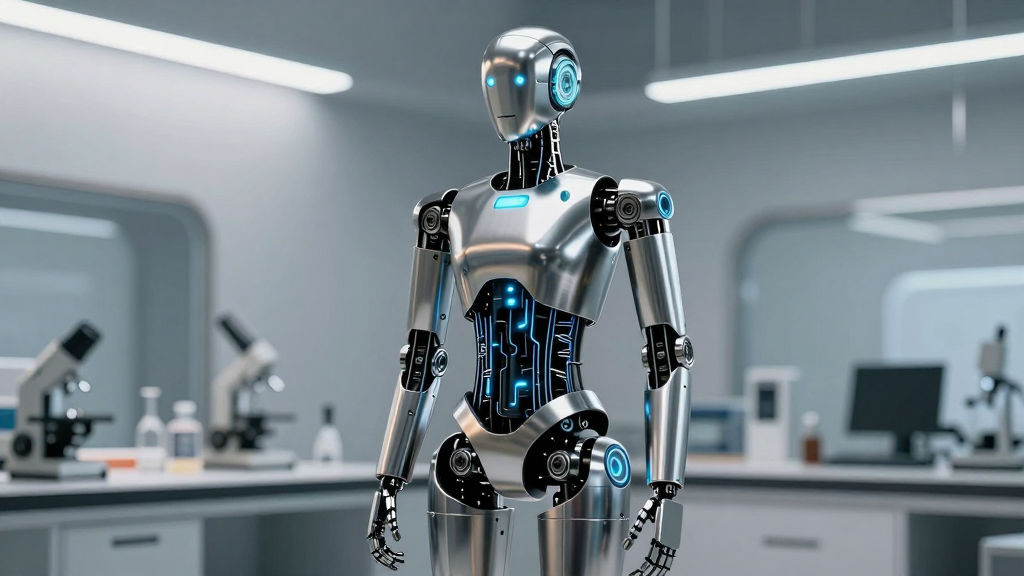
Physical AI CES 2026: Building the Future of Robotics
Estimated reading time: 6 minutes
- CES 2026 marks the commercial transition of AI from virtual screens to physical, embodied systems.
- Industry leaders like Qualcomm, AMD, and Intel are prioritizing high-performance edge computing to eliminate latency.
- Humanoid robots and vision-language-action (VLA) models are moving from lab simulations to real-world industrial and healthcare deployments.
- Safety and private infrastructure remain paramount as autonomous machines enter unstructured public spaces.
- The Dawn of Physical AI
- Qualcomm Dragonwing IQ10: Powering the Edge
- AMD P100 Humanoid Robots and Industrial Resilience
- Intel Core Ultra Series 3 RoBee: AI in Healthcare
- Nvidia Alpamayo VLA Models: Beyond Simulation
- Wearables as the Consumer Gateway
- Precision Surgery with LEM Surgical’s Dynamis
- Safety and Security in the Physical AI Era
- Hyundai Atlas Robotics: From Demo to Factory Floor
- The Economic Impact of Physical AI
- Conclusion
- Sources
The digital age is officially stepping into the physical world. For years, artificial intelligence lived behind screens, generating text and images in a virtual vacuum. However, the landscape shifted dramatically at the start of this year. Experts now look back at Physical AI CES 2026 as the moment when intelligence finally gained a body.
This transition marks a pivot from speculative hype toward deployable, real-world systems. Organizations are no longer satisfied with chatbots that merely “know” things. Instead, they demand machines that can “do” things in complex, unstructured environments. Consequently, the focus has moved from cloud-based large language models to on-device physical intelligence.
The Dawn of Physical AI
The events at CES 2026 signaled a new era for global industry. Analysts suggest that 2026 is the year physical AI was born as a commercial reality. Previously, robotics relied on rigid programming and narrow datasets. Today, generative models allow robots to learn through observation and simulation.
This shift depends heavily on new hardware architectures. Companies are moving away from centralized cloud processing to avoid high latency. For physical machines, a delay of even a few milliseconds can lead to catastrophic failure. Therefore, the industry is prioritizing high-performance edge computing.
Qualcomm Dragonwing IQ10: Powering the Edge
One of the most significant reveals at the show was the Qualcomm Dragonwing IQ10. This platform serves as a powerhouse for real-time robotics. It features an 18-core Oryon CPU, a robust Adreno GPU, and a specialized Hexagon NPU. Together, these components deliver a 5x CPU uplift compared to previous generations.
Low-latency inference is critical for drones and autonomous wearables. The IQ10 enables these devices to process sensory data locally. As a result, machines can navigate obstacles without waiting for a cloud response. This level of autonomy is vital for logistics companies operating in remote areas.
Furthermore, the IQ10 supports sub-millisecond latency for complex tasks. This capability ensures that drones can make split-second adjustments during flight. In contrast to older models, the IQ10 manages power more efficiently. This allows for longer mission times in industrial inspection and delivery.
AMD P100 Humanoid Robots and Industrial Resilience
While Qualcomm targets mobile edge devices, AMD is focusing on heavy industry. The AMD P100 humanoid robots roadmap highlights a push for factory resilience. Specifically, these embedded AI chips power the Generative Bionics GENE.01, a humanoid designed for the assembly line.
The GENE.01 stands out due to its full-body tactile sensing. This skin-like sensor array allows the robot to feel its surroundings. Consequently, it can work safely alongside human employees. Most industrial robots require safety cages, but the GENE.01 moves with human-like fluidness and awareness.
For manufacturers, this technology offers a clear path to ROI. These robots can handle repetitive tasks with extreme precision. For example, they can detect microscopic defects that the human eye might miss. By integrating these systems, factories can significantly reduce waste and improve production throughput.
Intel Core Ultra Series 3 RoBee: AI in Healthcare
Physical AI is also making significant strides in the medical sector. The Intel Core Ultra Series 3 RoBee is a prime example of this trend. Developed by Oversonic Robotics, RoBee assists in neurological rehabilitation and patient care.
RoBee utilizes the Intel Core Ultra Series 3 for real-time processing. This allows the robot to handle complex tasks like patient monitoring and mobility assistance. Because the processing happens on-device, patient data remains private and secure. This is a major advantage over cloud-reliant medical devices.
Additionally, RoBee handles the high throughput required for multimodal reasoning. It can listen to a patient, observe their gait, and cross-reference medical records simultaneously. By reducing the burden on human caregivers, RoBee helps address the growing shortage of healthcare workers. As hospitals look to modernize, the need for robust private AI infrastructure becomes even more apparent.
Nvidia Alpamayo VLA Models: Beyond Simulation
Nvidia continues to dominate the software layer of physical intelligence. At CES, they introduced the Nvidia Alpamayo VLA models. VLA stands for Vision-Language-Action, a framework that integrates perception and movement. These models allow robots to understand verbal instructions and execute them in the physical world.
The Alpamayo models work in tandem with the Isaac GR00T N1 simulation. This simulation environment allows robots to practice millions of tasks in a virtual space. Once they master a skill, the knowledge is transferred to the physical hardware. This “sim-to-real” pipeline drastically reduces the time required for training.
This technology is particularly impactful for Level 5 autonomous vehicles (AVs). While previous models struggled with unpredictable scenarios, Alpamayo provides real-time reasoning. For instance, it can understand the nuance of a construction worker’s hand signals. This pushes AVs closer to full commercialization in urban environments.
Wearables as the Consumer Gateway
Not all physical AI requires a six-foot humanoid body. Many consumers will first encounter this technology through wearables. Smart glasses and health rings are becoming the primary entry points for the general public. AT&T Ventures predicts that 2026 will be the year these devices go mainstream.
Devices like the Ray-Ban Meta glasses utilize world models to provide contextual Q&A. If you look at a landmark, the glasses can explain its history in real-time. Similarly, health rings use edge computing to monitor vital signs constantly. These devices offer a lower-cost alternative to the high price of industrial robotics.
Personal health monitoring is seeing a massive shift in productivity. Wearables can now predict potential health issues before they become emergencies. By providing actionable insights, these devices empower users to take control of their well-being. This reflects a broader trend seen when Intel’s previous AI chip efforts first began challenging the status quo.
Precision Surgery with LEM Surgical’s Dynamis
In the operating room, precision is everything. LEM Surgical’s Dynamis platform uses Nvidia Isaac to power autonomous surgery. This system trains autonomous arms to perform minimally invasive procedures. By using multimodal reasoning, the robot can adjust to the unique anatomy of each patient.
Precision robotics reduce the margin of error in complex surgeries. This leads to shorter recovery times and better outcomes for patients. Furthermore, these systems allow surgeons to focus on high-level decision-making. The robot handles the steady-handed execution of the surgical plan.
The use of open-source AI models in research has accelerated these developments. Developers can now build upon existing frameworks to create specialized medical applications. This collaborative approach is driving innovation faster than ever before.
Safety and Security in the Physical AI Era
Deploying AI in the real world introduces significant risks. Unlike a digital chatbot, a physical robot can cause real-world damage. Therefore, safety is a primary concern for enterprise deployment. Deloitte and EE Times have both highlighted the need for rigorous safeguards.
Enterprises must implement emergency stops and robust cyber defenses. Because these robots are connected to internal networks, they represent potential entry points for hackers. Audit trails are also essential for regulatory compliance. Every action taken by a physical AI must be logged and explainable.
According to industry reports, CES 2026 signals the year physical AI was born, but safety must remain the priority. Structured environments like warehouses are the easiest places to start. However, moving into unstructured spaces like public streets requires much higher levels of caution.
Hyundai Atlas Robotics: From Demo to Factory Floor
The Hyundai Atlas robotics program represents the “ChatGPT moment” for the physical world. Hyundai recently detailed a production roadmap that brings Atlas to factory floors this year. This robot is designed to handle hazardous tasks that are too dangerous for humans.
The Atlas robot excels at reasoning and planning in complex environments. It can navigate cluttered factory floors and manipulate heavy objects with ease. This integration reduces workplace injuries and improves overall efficiency. Hyundai’s success provides a benchmark for other companies looking to deploy humanoids.
The resilience benefits of Atlas are undeniable. By automating dangerous tasks, companies can protect their most valuable asset: their people. This shift also allows human workers to move into more creative and strategic roles. The transition may be challenging, but the long-term rewards are substantial.
The Economic Impact of Physical AI
The economic implications of this technological leap are profound. We are seeing a shift from purely virtual services to physical automation. This change is driving investment into hardware and infrastructure. Companies that ignored the hardware side of AI are now scrambling to catch up.
Structured sectors like manufacturing and logistics are seeing the fastest ROI. In these environments, the variables are controlled, making it easier for AI to succeed. However, as the models improve, we will see adoption in more varied sectors. Agriculture, for instance, is starting to use autonomous tractors and harvesters.
Furthermore, physical AI is creating new job categories. We need engineers to maintain these robots and data scientists to train them. The demand for specialized hardware technicians is also skyrocketing. While some roles will be automated, the net effect on the economy is likely to be positive.
Conclusion
The innovations showcased at Physical AI CES 2026 prove that the age of embodied intelligence is here. From the Qualcomm Dragonwing IQ10 powering edge devices to the Hyundai Atlas robotics transforming factories, the physical world is being rewritten. Companies are no longer asking if AI will help them; they are asking how quickly they can deploy it.
As we move forward, the focus will remain on safety, reliability, and local processing. High-performance chips like those from AMD and Intel are providing the necessary power. Meanwhile, software frameworks from Nvidia are providing the “brains.” Together, these technologies are creating a more efficient and capable world.
At Synthetic Labs, we are committed to helping you navigate this complex landscape. Whether you are building private infrastructure or deploying the latest robotics, we have the insights you need. The physical AI revolution is just beginning, and the opportunities are limitless.
Subscribe for weekly AI insights and stay ahead of the curve.
FAQ
- What is the main difference between Generative AI and Physical AI?
- Generative AI focuses on creating digital content like text and images. Physical AI integrates these intelligence models with hardware to interact with and manipulate the physical world.
- Why is on-device processing important for robotics?
- Robots require near-instant response times to navigate and perform tasks safely. On-device processing reduces latency, ensures privacy, and allows the machine to function without a constant internet connection.
- Are humanoid robots ready for home use?
- Currently, humanoid robots like the GENE.01 and Atlas are primarily designed for industrial and medical settings. Consumer-level home robots are still several years away from being both affordable and fully capable.
- How does simulation help in training physical AI?
- Simulation allows robots to practice tasks millions of times in a safe, virtual environment. This speeds up the learning process and prevents expensive damage to physical hardware during the initial training phases.