
Securing the Future: The US Japan AI Quantum Pact
Estimated reading time: 7 minutes
- The landmark agreement focuses on artificial intelligence, quantum computing, and semiconductor resilience.
- A strategic goal to reduce reliance on single manufacturing hubs by 30% by 2028.
- Introduction of AI-optimized “digital twins” to revolutionize high-performance chip fabrication.
- Collaborative focus on quantum error mitigation and standardized performance benchmarks.
- Strengthening of global supply chains and verified content infrastructure through tools like CleanFeed.
- The Strategic Importance of the US-Japan Alliance
- Unpacking the US Japan AI Quantum Pact
- Quantum Error Mitigation and Shared Standards
- Accelerating AI-Optimized Fabrication
- The Intersection of Physical AI and Global Manufacturing
- Securing Supply Chains Against Future Shortages
- Advancing Content Verification and Trust
- The MIT-IBM Research Lab: A Hub for Innovation
- Impact on Urban Mobility and Autonomous Systems
- Edge AI and Remote Diagnostics
- The Role of Generative Media in Business
- Strategic Benefits for Founders and CTOs
- Challenges and Future Outlook
- Conclusion
The global technological landscape is shifting toward a new era of cooperation. Recently, a landmark agreement has emerged between two global powerhouses. The US Japan AI quantum pact represents a strategic move to secure the future of innovation. This collaboration focuses on three core pillars: artificial intelligence, quantum computing, and semiconductor resilience. Consequently, this alliance aims to redefine how nations build and protect their digital infrastructure.
At Synthetic Labs, we recognize that sovereignty starts with the hardware. The US Japan AI quantum pact is not just a diplomatic gesture. It is a technical roadmap for the next decade. By aligning research standards and manufacturing goals, these nations are building a shield against supply chain instability. This partnership will likely reduce Western reliance on singular manufacturing hubs by 30% by 2028.
The Strategic Importance of the US-Japan Alliance
The tech industry currently faces significant geopolitical pressure. Leaders realize that domestic capabilities are no longer sufficient. Therefore, the US Japan AI quantum pact creates a unified front for research and development. This alliance prioritizes the creation of secure supply chains for the most critical components. These include high-end GPUs and quantum processors that will power future enterprise systems.
Governments are now treating AI and quantum tools as national security assets. Japan brings its precision manufacturing and robotics expertise to the table. Meanwhile, the United States offers leading software ecosystems and cloud infrastructure. Together, they are developing shared standards for quantum error mitigation. This technical foundation is essential for building stable, large-scale quantum computers.
Unpacking the US Japan AI Quantum Pact
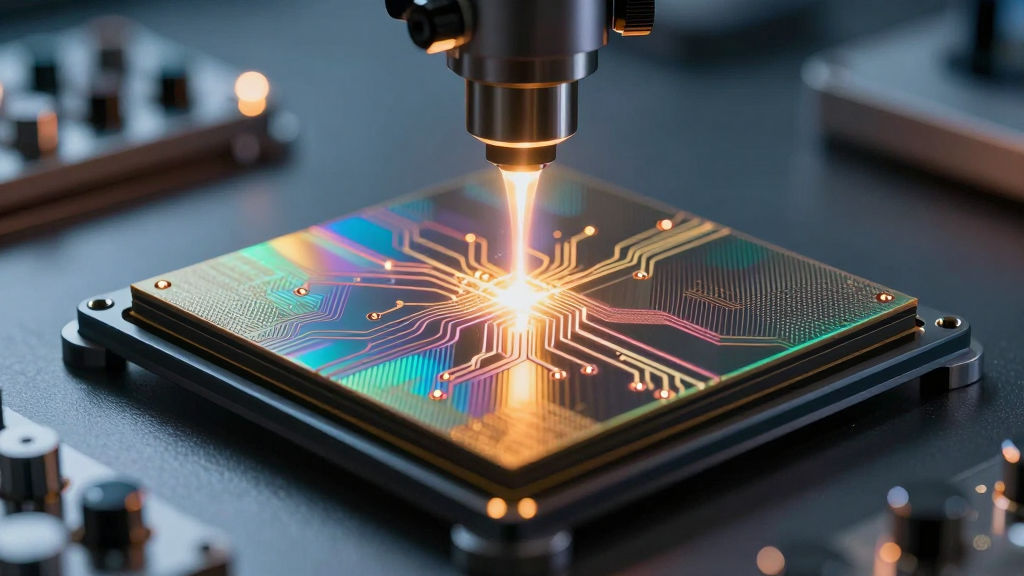
The agreement specifically outlines joint R&D initiatives for resilient chip production. Global shortages have previously crippled industries ranging from automotive to consumer electronics. Because of this, the pact focuses on “de-risking” the manufacturing process. Both nations plan to invest billions into AI-optimized fab processes. These processes use machine learning to detect defects in silicon wafers in real-time.
Notably, the collaboration extends to the logic behind the hardware. Researchers are working on algorithms that can run across hybrid AI-quantum systems. This integration allows for faster materials discovery and more efficient energy grids. For instance, the pact encourages the development of private AI infrastructure that can leverage these hardware breakthroughs securely.
Quantum Error Mitigation and Shared Standards
Quantum computing currently suffers from high noise levels. Even small environmental changes can cause calculation errors. However, the US Japan AI quantum pact addresses this through shared error-correction protocols. Engineers from both nations are collaborating on noise-resilient qubits. This work ensures that quantum breakthroughs in one country are compatible with the hardware of the other.
Furthermore, standardized benchmarks allow companies to compare performance accurately. Without these standards, the industry remains fragmented. The pact aims to establish a common language for quantum “volume” and “fidelity.” As a result, enterprises can adopt quantum solutions with greater confidence. This transparency is vital for the eventual commercialization of quantum-driven optimization.
Accelerating AI-Optimized Fabrication
The alliance is revolutionizing how we build semiconductors. Traditional fab plants are incredibly complex and prone to human error. By integrating AI, these facilities can become self-correcting. Specifically, the pact promotes the use of “digital twins” in chip manufacturing. These are 1:1 virtual replicas of the production line.
These twins allow engineers to simulate changes before they happen. This reduces waste and increases the yield of high-performance chips. Consequently, the cost of manufacturing drops while the quality increases. These advancements directly benefit the production of small reasoning AI models that require specialized silicon.
The Intersection of Physical AI and Global Manufacturing
The US Japan AI quantum pact also influences the world of physical AI. This refers to AI that interacts with the physical world, such as robots and autonomous vehicles. Companies like LG and NVIDIA are already exploring these synergies. They blend simulation stacks with advanced display-sensor technology to create smarter factories.
Moreover, Siemens is leading the charge in factory floor automation. Their new TIA Portal AI auto-generates PLC code for industrial machines. This shift slashes engineering time from weeks to hours. By aligning with the standards set by the US-Japan pact, these tools become more interoperable. This interoperability is a key driver for the Industry 5.0 revolution.
Securing Supply Chains Against Future Shortages
The primary goal of the US Japan AI quantum pact is resilience. Dependence on a single geographic region for chips is a major risk. Therefore, the pact encourages the construction of new fab plants in both countries. This geographical diversification ensures that a crisis in one area does not stop global progress.
Additionally, the pact focuses on the raw materials needed for these chips. Both nations are seeking to secure access to rare earth elements. They are also researching synthetic alternatives through the MIT-IBM Research Lab. This lab focuses on hybrid AI-quantum simulations to discover new materials. Such discoveries could end the reliance on traditional, environmentally damaging mining.
Advancing Content Verification and Trust
As AI becomes more powerful, trust becomes a rare commodity. The US Japan AI quantum pact recognizes the need for robust verification tools. Projects like CleanFeed and PADSE are essential for this mission. CleanFeed acts as a deepfake audio filter with high accuracy. Meanwhile, PADSE audits AI models for hidden biases.
These tools are not just for governments. They provide an enterprise trust layer for companies using generative media. For example, CleanFeed deepfake detection helps organizations verify the identity of their staff in remote settings. This prevents social engineering attacks and protects corporate secrets. Ensuring that AI remains a tool for truth is a priority for both nations.
The MIT-IBM Research Lab: A Hub for Innovation
The MIT-IBM Computing Research Lab serves as a technical engine for this alliance. It focuses on the bridge between classical AI and quantum rigs. Researchers here use Watsonx integration with 100-qubit systems. Their goal is to achieve 1,000x faster variational algorithms for enterprise use.
Specifically, the lab works on optimization problems that are too complex for today’s computers. These include logistics for global shipping and molecular modeling for new drugs. By combining the strengths of MIT and IBM, the pact gains a world-class R&D center. This center provides the evidence-based research needed to guide national policy. According to MIT News: Artificial Intelligence, these hybrid models are the future of industrial science.
Impact on Urban Mobility and Autonomous Systems
The pact’s influence reaches into the streets of our cities. Kakao Mobility is currently developing Level 4 autonomy using these new hardware standards. Their roadmap focuses on ML redundancy and sensor fusion. By using simulation validation, they aim to deploy robotaxis that are safer than human drivers.
Because the US Japan AI quantum pact promotes shared data formats, these vehicles can operate across borders more easily. Standardized sensor data allows a vehicle trained in Tokyo to understand the streets of San Francisco. This global compatibility accelerates the adoption of autonomous fleets. As a result, we may see a 20% reduction in urban congestion by 2030.
Edge AI and Remote Diagnostics
Edge computing is another area where the alliance excels. The Vecow EAC-6000 series, powered by NVIDIA Jetson, is a prime example. This hardware enables AI processing at the “edge” of the network, such as on a traffic camera or medical device. The Allxon cloud console allows for remote diagnostics of these systems.
This capability is crucial for smart cities and hospital networks. It ensures 99.99% uptime for critical infrastructure. By adhering to the security protocols of the US Japan AI quantum pact, these edge devices remain protected from cyber threats. This “secure-by-design” approach is the gold standard for modern IoT deployments.
The Role of Generative Media in Business
Generative media is also evolving under this new framework. Google Veo 3 on Vertex AI is democratizing professional video generation. SMBs can now create high-quality marketing content without expensive custom GPUs. The pact ensures that the underlying infrastructure for these models remains accessible and competitive.
Furthermore, these generative tools are being integrated into training simulations. Companies use Veo 3 to create realistic AR content for employee onboarding. This reduces training costs and improves safety in high-risk industries. Because these models run on optimized TPU v5e hardware, the latency is low enough for real-time applications.
Strategic Benefits for Founders and CTOs
For tech leaders, the US Japan AI quantum pact provides a stable environment for long-term planning. Knowing that the two largest tech economies are aligned reduces market uncertainty. CTOs can invest in quantum-ready infrastructure without fearing sudden shifts in standards. This stability encourages the development of agentic AI automation across global operations.
Moreover, the focus on sovereign infrastructure allows companies to protect their intellectual property. By using private LLMs on certified hardware, businesses avoid the risks of the “public” cloud. The US-Japan alliance reinforces the importance of this private approach. It provides a framework for secure, high-performance computing that respects data privacy.
Challenges and Future Outlook
Despite the progress, challenges remain. Aligning two different regulatory environments is a complex task. For instance, data privacy laws in Japan differ from those in the United States. However, the pact includes a committee to harmonize these rules over time. This ongoing dialogue is essential for a frictionless tech ecosystem.
Looking ahead, we can expect more nations to join this “tech circle of trust.” The US Japan AI quantum pact is a blueprint for international cooperation in the age of intelligence. It proves that nations can work together to solve the hardest technical problems of our time. By focusing on shared goals, we can build a future that is both innovative and secure.
Conclusion
The US Japan AI quantum pact marks a defining moment in the history of technology. It addresses the critical needs of security, resilience, and innovation in a single framework. By combining quantum research with AI-optimized manufacturing, this alliance secures the global supply chain. It also provides the trust layers necessary for the next generation of generative media and physical AI.
At Synthetic Labs, we believe these developments are vital for our clients. Whether you are building private infrastructure or deploying autonomous systems, this pact provides the stability you need. The future of AI is not just about software; it is about the hardware and the partnerships that sustain it.
Subscribe for weekly AI insights and stay ahead of the curve.
FAQ
- What is the primary goal of the US Japan AI quantum pact?
- The pact aims to secure tech supply chains, standardize quantum computing research, and foster joint R&D in AI-optimized manufacturing to reduce reliance on single-region production.
- How will this alliance affect the cost of semiconductors?
- By using AI-optimized fabrication and digital twins, the alliance expects to increase chip yields and reduce waste, which should lead to more stable and lower costs for high-performance silicon over time.
- What are CleanFeed and PADSE?
- These are EU and internationally supported tools for AI transparency. CleanFeed detects deepfake audio, while PADSE audits AI models for bias, ensuring trust in digital content.
- Can small businesses benefit from these high-level pacts?
- Yes. The pact accelerates the release of tools like Google Veo 3 and standardized Edge AI hardware, making professional-grade AI more accessible and affordable for SMBs.
- What is the role of the MIT-IBM Research Lab in this agreement?
- The lab serves as a primary R&D hub, focusing on hybrid AI-quantum algorithms for materials discovery, which helps secure the raw materials needed for future tech hardware.